
Getting a job in Dubai comes down to three things recruiters check in the first minute: whether your experience matches the role, whether you can legally start soon, and whether your salary expectation fits their budget. The nine steps below are ordered the way most hiring actually happens, from choosing roles to accepting an offer safely.
1. Pick a narrow set of roles you can prove
Recruiters in Dubai see hundreds of applications for popular roles. Applying to everything spreads your effort thin. Choose two or three job titles where you already have evidence: past results, certificates or tools you’ve used. A sales associate applying for “sales associate”, “retail sales advisor” and “store supervisor” will get more replies than one who also applies for receptionist, driver and data entry roles.
Then check what those roles actually pay. Public salary guides from recruiters such as Hays, Cooper Fitch and Michael Page publish UAE ranges by job and seniority. Write down a realistic range and the lowest monthly package you would accept, including housing and transport.
2. Make your CV readable for UAE software and people
Many employers screen CVs with applicant tracking systems before a person reads them. Keep the layout simple and put the details UAE recruiters look for near the top:
- Current location and visa status, for example “Dubai, visit visa valid until 15 December”.
- Availability to join, such as “immediately” or “30 days’ notice”.
- Nationality and driving licence, if relevant to the role.
- Three to five results with numbers, such as “cut invoice processing time from 5 days to 2”.
Our UAE CV format guide shows the section order, and the free CV maker builds an ATS-safe version you can download as a PDF.
3. Tailor each application to the job ad
Read the ad, copy the five or six skills it repeats, and make sure the same words appear in your CV where they’re true. If the ad asks for “SAP” and your CV says “ERP software”, the system may never match you. Our guide on tailoring your CV to a job description walks through a full before-and-after example.
4. Write a short cover letter or email
Keep it under 200 words: the role, one result that fits it, your visa status and when you can join. Long letters are rarely read. Use our UAE cover letter template or the job email templates if you’re applying straight to HR.
5. Apply where Dubai employers actually hire
Most private-sector hiring runs through LinkedIn, Bayt, GulfTalent, Naukrigulf and company career pages. Government entities hire through their own portals, such as Dubai Careers for Dubai Government. Set daily alerts for your chosen titles and apply within the first few days a job is posted; older ads usually already have a shortlist.
Recruitment agencies can help, but in the UAE a legitimate agency is paid by the employer, not by you. Before you share your passport, check the agency’s licence using our recruitment agency licence guide.
6. Sort out your visa position early
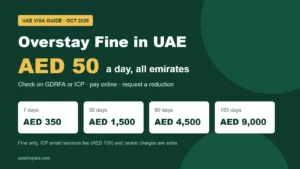
Employers prefer candidates who can join quickly. If you’re coming from abroad to search, the UAE offers a job seeker visa for eligible applicants, or you can use a visit visa. Either way, you can attend interviews but you can’t work until your employer issues a work permit and residence visa. Our guide to changing a visit visa to a work visa explains the steps after you get an offer.
Have these scanned and ready: passport (valid for at least six months), passport photo, degree and experience letters. If your role needs a degree, start certificate attestation early because it can take weeks.
7. Fix your LinkedIn profile
Recruiters search LinkedIn by job title and location. Set your location to Dubai if you’re already here, use the exact job title you want in your headline, and add the same results you use on your CV. Turn on “Open to work” for recruiters only if you’re currently employed.
8. Prepare for interviews and the salary question
Dubai interviews are often short and practical. Prepare three stories using the STAR method (situation, task, action, result) and practise a 60-second answer to “Tell me about yourself”. Expect a direct question about salary: answer with a monthly range in AED based on your research, and ask whether housing and transport are included. Our interview questions and answers guide has sample answers.
After the interview, send a brief thank-you message within 24 hours, then wait about a week before following up. See how to follow up after an interview.
9. Check the offer before you resign or travel
Fake job offers are common, especially ones that ask for a “visa fee”. A real employer pays for your work permit and visa. Compare the offer letter with the contract you sign later, and verify the company before you send documents. Our job offer verification guide lists the checks.
A simple four-week plan
| Week | Focus | Target |
|---|---|---|
| 1 | Choose roles, research salaries, rebuild CV and LinkedIn | 3 target job titles and one clean CV |
| 2 | Apply and contact recruiters | 10 to 15 tailored applications |
| 3 | Interview practice | 3 STAR stories and a salary range |
| 4 | Follow up and adjust | Polite follow-ups; change job titles if you get no replies |
If four weeks of tailored applications bring no interviews, the problem is usually the role choice or the CV, not the number of applications. Ask a recruiter or someone working in the role to read your CV against two real job ads.
Sources and further reading
- Ministry of Human Resources and Emiratisation (MOHRE): work permits and recruitment rules
- Dubai Careers: Dubai Government job portal
- Federal Decree-Law No. 33 of 2021: employers may not charge workers recruitment fees