Starting a new job in the UAE feels real the day you’re asked, “What’s your IBAN?” Your UAE bank account is where your salary lands, your rent gets paid, and your daily life begins.Here’s the main rule to know in 2026: most banks want a UAE residence visa, and many will accept an Emirates ID application receipt while the physical card is still printing. When your documents are ready, account opening often takes 1 to 2 business days. Still, some applications take up to 2 weeks because of compliance checks (KYC and source-of-funds reviews). The UAE government portal has a short overview of banking in the UAE.Below is a simple checklist and a realistic timeline, written for new employees who want fewer surprises.
What you can open in the UAE (and what changes after your residence visa)
An employee opens a bank account at a UAE branch counter.As a newcomer, you can’t always open the same account as a fully onboarded resident. Think of it like getting building access. You might enter the lobby first, but you’ll need your full ID to access every floor.In practice, your “bank-ready” status changes in stages. First you join the company and start the residence process. Next, your Emirates ID application is submitted. After that, you receive the physical Emirates ID card. Many banks move faster once you reach stage two, as long as your employer and documents check out.A “salary account” matters because most employers pay through WPS (Wage Protection System). Payroll teams prefer a UAE IBAN under your name, with predictable setup and fewer rejected transfers.
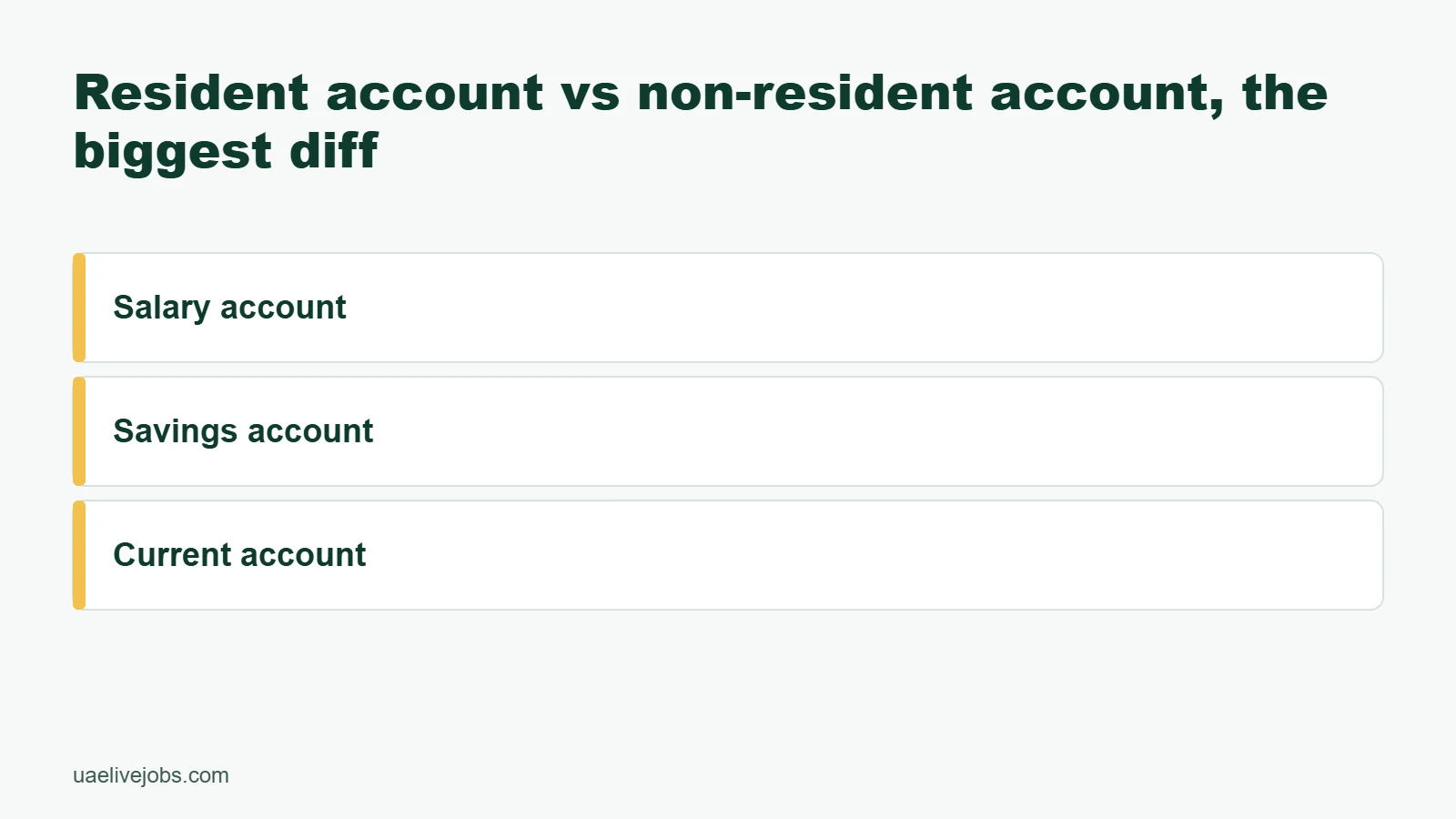
Resident account vs non-resident account, the biggest difference
A resident account (after your residence visa is issued, and often once Emirates ID is in process) usually gives full day-to-day banking: debit card, online banking, local transfers, and normal limits.A non-resident account can exist in some banks, but it often comes with tighter limits and stricter checks. It may also require higher balances. For most new employees, it’s better to aim for a resident account as soon as your visa file moves forward.Rules vary by bank and sometimes by branch. A quick call before you visit can save a wasted trip.
Salary account, savings, and current account, which one fits a new job
Most banks will guide you into one of these:
Salary account: Built for monthly salary transfers, often with better fee terms once payroll starts.
Savings account: Simple for holding money and spending by debit card, sometimes with fewer features.
Current account: May include a checkbook and broader payment options (where offered), but banks can apply stricter approval rules.
Extras like checkbooks, credit cards, and loans usually take longer. Banks often wait for your physical Emirates ID, stable salary credits, or both.
UAE bank account documents for new employees in 2026 (simple checklist)
Common account opening documents laid out for quick reviewDocument quality affects speed more than people expect. Blurry scans, expired pages, and name mismatches trigger delays. Bring originals and copies, and keep clean PDFs on your phone.If your job paperwork is still in progress, compare your offer letter and contract details early. Small differences can cause HR letters to be reissued. This guide helps: UAE job offer letter vs employment contract.
Core documents most banks ask for
Most UAE banks request a similar set (not identical), especially for a salary transfer account:
Passport (original) + copy, plus your residence visa page (or e-visa page where applicable)
Emirates ID (original + copy), or your Emirates ID application/registration form receipt
Salary certificate from HR, or sometimes an employment contract (some banks also accept a payslip later)
Proof of UAE address, such as tenancy contract, Ejari (Dubai), or a recent utility bill
Passport-sized photos (some branches ask for 2 to 4, others don’t)
If your name format differs across documents (missing middle name, different spelling), fix it first. Banks often won’t “assume” it’s the same person.
Banks may request translation or attestation for certain documents issued abroad. That depends on your case and bank policy.
Extra documents that can speed approval when compliance checks are strict
Compliance teams look for a clear story: who you are, where your money comes from, and why you’re opening the account. If your profile triggers extra review, these documents can reduce back-and-forth:
Last 6 months bank statements from your home country (PDF is fine)
Bank reference letter (if you can get one quickly)
CV (helps connect your job history to your income)
Signed employment contract (useful when the salary certificate is delayed)
Tip: keep both soft copies and printed copies. Some branches still scan paper, even if you applied online.
Setup timeline: what happens from your first workday to an active account
When everything lines up, you can open an account fast. The slow part is usually your residency and Emirates ID steps, not the bank form itself. If you want the bigger immigration picture, use this Emirates ID and residency timeline for new UAE employees.Here’s a realistic timeline you can plan around:
Stage
What usually happens
Typical time
First workday
HR starts visa file, you request salary certificate
Day 1
Document collection
You gather passport copies, ID receipt, address proof
Days 1 to 3
Account opening
Branch or app application, ID checks, KYC
1 to 2 business days (when ready)
Compliance review (if triggered)
Bank asks for extra proof like statements
Up to 2 weeks
Debit card and account access
Card issued or delivered, app access improves
Same day to 7 days
The takeaway: plan for 1 to 2 days, but keep a 2-week buffer if your Emirates ID is pending or checks get stricter.
Days 1-3: visa process starts, you collect documents, and choose a bank
Most employers handle the work visa steps. Still, you can speed your banking setup by acting early.Ask HR for your salary certificate on day one. Also confirm the salary transfer details and whether your bank needs a stamped letter. If you’re still learning the visa flow, this step-by-step UAE employment visa guide helps you know what comes next.Before you go to the branch, make sure you have: passport originals and copies, active UAE phone number, working email, and any address proof you can provide.
Day 3 to Week 2: account opening, card delivery, and getting salary paid
Many banks do an in-person identity check, even if you start online. After approval, you’ll receive your account number and IBAN, then your debit card is issued or delivered.Emirates ID cards often take 1 to 2 weeks to arrive. Some banks unlock higher transfer limits or full online banking features only after the physical card is available.If payroll is urgent, speak to HR right away. Some companies can hold salary briefly, then pay once your IBAN is active. Others may follow a strict payroll cut-off date. Either way, open the account as soon as the bank accepts your Emirates ID receipt.
Avoid delays: common problems and quick fixes new employees can use
Delays usually come from small gaps. The good news is that most have simple fixes when you respond fast and stay organized.
Fast fixes for the most common rejections and hold-ups
Unclear copies cause trouble, especially visa pages and entry stamps. Bring clean color copies and avoid screenshots.Outdated proof of address is another issue. If you don’t have a tenancy contract yet, ask the bank what else they accept. Some accept a letter from your employer, or a temporary housing document, but policies differ.Salary certificates get rejected when they miss key details. Ask HR to include your job title, salary amount, start date, and company stamp (if the bank requests stamping). Also keep your signature consistent. A rushed signature today can block a card request tomorrow.
Fees, minimum balances, and why your account might get charged in the first month
Many UAE accounts have a minimum balance rule. If your balance stays below the set amount, the bank may charge a monthly fee. New employees get caught because the first salary hasn’t landed yet.
Ask if you qualify for a salary transfer account with a fee waiver, and confirm when the waiver starts.
To stay safe, keep a small buffer until payroll becomes regular. Also ask the bank about fall-back options if salary is delayed, so you don’t get charged for a timing problem.
The quickest route to an active account
Getting a UAE bank account in 2026 is mostly paperwork and timing, not luck. If you want the fastest path to an active IBAN and debit card, follow these steps:
Start your residence visa and Emirates ID process with HR
Request the salary certificate early, and confirm the required format
Prepare passport and visa copies, plus Emirates ID or the application receipt
Bring UAE address proof, or confirm acceptable alternatives in advance
Keep extra proof ready (home bank statements, reference letter) for strict checks
Apply, then expect 1 to 2 days when ready, or up to 2 weeks if compliance reviews kick in
Before you visit a branch, call and confirm the latest document list, because small policy changes happen often. Your best timeline comes from matching the right bank to your exact visa stage.
Farooq Malik
Farooq Malik is the founder and editor of UAE Live Jobs, an independent guide hub for people working in the United Arab Emirates. He researches and writes practical guides on labour rights, pay, visas, CVs and job applications, building each one on official sources such as MOHRE, ICP, GDRFA and the UAE government portal (u.ae). Every guide is checked before it's published and updated when the rules change. You can reach Farooq at info@uaelivejobs.com.