
Still waiting to hear back on an application, before any interview? Wait about a week, then send one short email. Our job email templates include a follow-up you can adapt.
A good interview can still end with a long wait. In the UAE, hiring often involves recruiters, department heads, budget approvals, and sometimes visa planning, so silence doesn’t always mean rejection.
A professional UAE job interview follow up keeps you visible without putting pressure on the employer. The right message, sent at the right time, can remind them why you fit the role.
Start with one clear action after the interview, then follow a calm schedule. Send your first message, allow several business days, and reach out once more if needed.
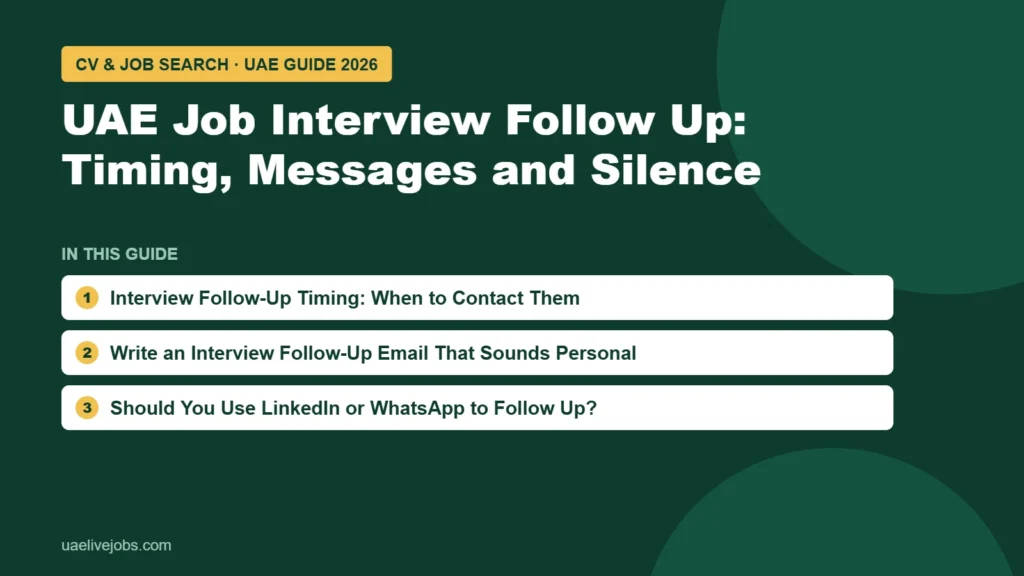
Interview Follow-Up Timing: When to Contact Them
Timing matters more than sending a long message. Recruiters are often handling several vacancies at once, and a hiring manager may be waiting for internal approval.
Send a thank you message within 24 hours
Send a short thank-you email within 24 hours of the interview. Do it on the same day if your interview was in the morning and you have time to write a thoughtful message.
This brief note is part of the wider interview process. Thank the interviewer, mention one useful point from the conversation, and restate your interest. Michael Page shares a helpful job interview thank-you email example that follows this simple approach.
Don’t write a full second cover letter. Two or three short paragraphs are enough.
Follow Their Decision Timeline First
Did the interviewer say, “We will update you by Thursday” or “You should hear from us next week”? Write that date down before you leave, so you know when to check on your job application.
Wait until the next working day after the promised date has passed. A polite message at that point is reasonable. For example, if they said Friday, send your email on Monday morning.
If no timeline was shared, wait five to seven working days after the interview before asking about your application status. This gives the company time to finish other interviews.
A follow-up sent before the employer’s own deadline can look impatient, even when you are genuinely interested in the job.
Write an Interview Follow-Up Email That Sounds Personal
Keep your follow up email easy to read on a phone. It gives the hiring manager room to respond. Busy recruiters rarely have time for long messages, especially during active hiring periods.
For additional career advice, Michael Page offers practical interview tips on writing thank-you emails.
Use a clear subject line such as:
- Thank you, [Job Title] interview
- Following up on the [Job Title] role
- [Your Name], interview on [Date]
One specific discussion point makes the message personal and shows you followed the interview process.
Include Four Useful Details
A strong thank you message includes the following:
- Thank the interviewer for their time and mention the interview date.
- Refer to one real point discussed, such as a project, client type, software system, or team goal.
- Connect that detail to a skill or experience you bring.
- Confirm your interest and ask about the next steps only if they were not already explained.
Avoid generic lines such as “I am the perfect candidate.” Let your experience make the point.
Thank-You Email Template After an Interview
Subject: Thank you, [Job Title] interview
Hello [Name],
Thank you for speaking with me on [day] about the [Job Title] position. I enjoyed learning more about [specific team goal, project, or responsibility discussed].
Our conversation confirmed my interest in the role. My experience with [relevant skill or achievement] would help me contribute to [specific need mentioned in the interview].
Thank you again for your time. I look forward to hearing about the next steps.
Kind regards,
[Your Name]
[Mobile Number]
[LinkedIn profile, if relevant]
Read it once before sending. Check the person’s name, job title, and company name. A small error can distract from an otherwise strong message.
Should You Use LinkedIn or WhatsApp to Follow Up?
Email is still the safest channel for a formal follow up email after an interview. It creates a clear record and gives the recipient space to reply when available.
That said, many UAE recruiters use LinkedIn and WhatsApp during the recruitment process. The best channel follows the interview process, including the channel used for your phone screen or initial contact. Following that preference shows professionalism.
LinkedIn Is Best for a Light Professional Connection
If you interviewed with a hiring manager and aren’t already connected, sending a LinkedIn connection request is acceptable. Keep the note short. Don’t send a detailed pitch in the connection request.
You can write:
Hello [Name], thank you for taking the time to speak with me about the [Job Title] role. I enjoyed our discussion about [topic]. I would be glad to stay connected.
If the recruiter asked you to communicate by email, use email for your follow-up. A LinkedIn message shouldn’t replace their preferred channel. This LinkedIn follow-up guidance also keeps the focus on timing and a direct request for an update.
Use WhatsApp Only When the Recruiter Uses It First
WhatsApp is common in UAE recruitment communication, especially for agency recruiters, walk-in interviews, sales roles, hospitality jobs, and urgent vacancies. Still, it isn’t an invitation to send repeated messages or calls.
Use WhatsApp when the recruiter contacted you there, asked you to message them there, or has clearly listed it as the communication channel.
WhatsApp follow-up template:
Hello [Recruiter Name], this is [Your Name]. Thank you again for arranging my interview for the [Job Title] position on 2026. I remain interested in the opportunity. Please let me know if you need any further details from me or if there is an update on the process. Thank you.
Send it during normal working hours. One message is enough. Don’t call repeatedly if they haven’t replied.
What to Do When the Employer Goes Silent
Radio silence is frustrating, particularly when you need a job quickly. But a delayed reply is common in Dubai, Abu Dhabi, and other UAE emirates.
Prolonged silence can feel like ghosting, but it doesn’t always mean rejection. An employer may be comparing candidates, waiting for a manager who is travelling, pausing the vacancy, or changing the budget.
These delays can happen during the interview process. If the employer remains unresponsive, don’t send daily messages or assume you know the reason.
Use a Two-Message Rule After the Interview
After your thank-you email, send your first status follow-up when the promised date passes or after five to seven working days.
If there is still no reply, wait another five to seven working days and send a second follow-up. After that, move on and keep applying. Don’t let one delayed job application stop you from contacting other employers.
A simple schedule looks like this:
| Stage | When to Send | What to Say |
|---|---|---|
| Thank-you message | Within 24 hours | Thank them and refer to the interview |
| First status check | After their deadline, or 5 to 7 working days | Ask for an update on next steps |
| Final follow-up | Another 5 to 7 working days later | Reconfirm interest and close politely |
Two post-interview follow-ups are normally enough. More messages can make a recruiter less likely to respond, not more likely.
Final Follow-Up Email Template
Here is a simple follow up email you can adapt:
Subject: Follow-up on [Job Title] interview
Hello [Name],
I hope you are well. I am following up on my interview for the [Job Title] position on 2026.
I remain interested in the opportunity and would appreciate any update you can share about the recruitment process or expected next steps. Please let me know if you need anything further from me.
Kind regards,
[Your Name]
Then leave the conversation there. Keep your UAE job search active, attend other interviews, and don’t pause your plans for one employer.
Add Value Only When You Have Something Useful
A follow-up can include more than a request for news, but value addition only helps when the extra item directly supports a need discussed in the interview. Sending articles, certificates, or work samples with no connection to the conversation creates more work for the reader.
Share One Relevant Item, Not a Folder
If you discussed a challenge during the interview, you may have something that supports your fit. This could be a short portfolio link, a relevant case study, a published article, or a work sample that wasn’t included in your original application.
For example, if the company needs an accountant with ERP experience, send a concise note with a relevant certification or project example. If you interviewed for a marketing role, a campaign result from your portfolio may be useful.
Write one sentence explaining why you’re sharing it. Don’t attach large files unless requested.
Value-add follow-up template:
Hello [Name],
Thank you again for discussing the [Job Title] role with me. You mentioned the team’s focus on [specific need].
I thought you might find this [portfolio item, case study, or article] relevant because it shows my experience with [related skill or result]. I remain interested in the role and would be happy to provide any further information.
Kind regards,
[Your Name]
This approach works when the item supports a point already raised in the interview. It doesn’t guarantee a positive result, but it can make your candidate profile easier to remember.
UAE Hiring Timelines, Company Size and Visa Questions
A small Dubai company may decide quickly because the owner or one manager makes the final call. A large employer, government-linked company, bank, or multinational may take longer because the interview process can involve an hr manager and several approvals for the candidate, salary, headcount, and start date.
Don’t assume a two-week wait means your interview went badly. Ask the recruiter for the expected decision timeframe and what the next steps are, then follow that timeline.
Keep Visa Questions Professional and Separate
It is fine to confirm your current visa status, notice period, and availability when the recruiter asks. Be accurate. Don’t say you can join immediately if you have obligations that make this impossible.
However, interview etiquette is different from legal or visa advice. A job offer is not the same as an issued work permit or completed residency process. The UAE government’s work visa information explains that normal employment visas are generally valid for two years and renewable, subject to the issuing authority’s conditions.
For private-sector employment, the process generally moves from a formal offer to a work permit and employment contract. The official employment process guide outlines those separate steps.
Never pay a recruiter for an offer, visa, or interview slot. Verify the company before sharing passport copies, bank details, or other sensitive documents.
Writing a follow-up email after an interview in the UAE
When should I follow up after a UAE job interview?
Send a brief thank-you message within 24 hours. For a status update, follow the employer’s stated deadline or wait five to seven working days if no timeline was provided.
Should I follow up by email, LinkedIn, or WhatsApp?
Email is generally the safest option because it provides a clear written record. Use LinkedIn or WhatsApp when the recruiter or hiring manager has already used that channel or specifically asked you to communicate there.
How many times should I follow up if the employer is silent?
After your thank-you message, send one status check and, if necessary, a final follow-up five to seven working days later. Two post-interview follow-ups are normally enough, so continue your job search after that.
Does a delayed response mean I was rejected?
Not necessarily. UAE employers may be waiting for internal approvals, comparing candidates, confirming budgets, or coordinating visa and start-date requirements.
Is it safe to pay a recruiter for a UAE job or visa?
No. You should never pay a recruiter for an interview slot, job offer, or visa, and you should verify the company before sharing sensitive documents.