
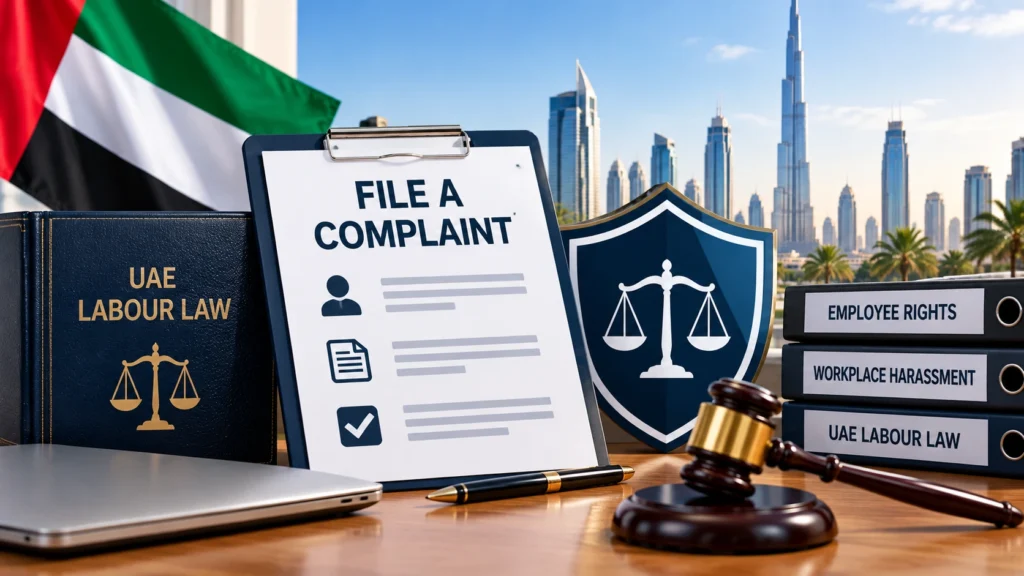
If you’ve experienced workplace harassment in the UAE, you probably need a clear way to report it. You may also be worried about your job, visa, employee rights, or whether speaking up could affect your workplace safety.
Start with your safety and your records. Check who legally employs you, since complaints about workplace harassment in the UAE can follow different routes for mainland, DIFC, and ADGM jobs. Here is how to take those steps without relying on a process that may not apply to your contract.
Workplace Harassment UAE: What Does the Law Cover?
Sexual Harassment, Bullying, and Abuse
For private-sector employees covered by federal law, Article 14 of the UAE Labour Law in Federal Decree-Law No. 33 of 2021 prohibits sexual harassment and bullying. It also prohibits verbal, physical, or psychological violence against a worker by an employer, supervisor, colleague, or co-worker.
Your report doesn’t have to use the perfect legal label. Describe the conduct plainly: unwanted touching, repeated sexual comments, verbal abuse, physical violence, or abusive messages, for example. Give dates and context rather than guessing at someone’s intention. Psychological harassment may be a plain-language description, not a separate statutory label.
A difficult conversation or a fair performance review isn’t automatically harassment. What was said or done, how often it happened, and the available evidence all matter. Discriminatory harassment may raise separate issues under applicable anti-discrimination rules. Federal coverage isn’t identical in financial free zones, including under DIFC Employment Law.
Harassment and Victimisation Aren’t the Same
Harassment concerns the conduct directed at you. Victimisation concerns harmful treatment because you raised a protected concern or supported someone else’s complaint, where the applicable law provides that protection.
If your shifts change, you lose duties, or you’re threatened after reporting, record those events separately. Don’t assume every workplace disagreement after a complaint is legally victimisation. The reason for the treatment matters, as does your employment jurisdiction.
Check Which Authority Covers Your Employer
A Dubai office address doesn’t tell you which complaint route applies. Check the legal employer on your signed contract, trade licence, and the authority that issued your work permit. The workplace brand may differ from the company employing you. The guide to UAE employment contract types can help you identify those documents.
| Employment system | Starting point for a complaint |
|---|---|
| Mainland private sector | Check your employer’s reporting process, then use the mainland ministry route when needed. |
| Other free zones | Ask the relevant free-zone authority which employment or dispute channel applies. |
| DIFC | Check the DIFC Employment Law and the appropriate DIFC dispute route. |
| ADGM | Check the ADGM Employment Regulations 2024 and ADGM’s applicable dispute route. |
The ADGM regulations took effect on 1 April 2025 and include workplace discrimination and victimisation protections. DIFC also has its own employment protections and anti-discrimination rules. Whether vicarious liability applies can depend on the jurisdiction and facts.
Some other free-zone employees may still have rights under federal labour rules but use a separate authority to begin a dispute. If your documents aren’t clear, ask the authority that issued your permit before filing. This check can save time when you’re already dealing with a stressful situation.
Keep Evidence Without Creating Another Problem
Build a Short Timeline
Write down each incident soon after it happens. Include the date, approximate time, location, who was present, what was said or done, and how you responded. If you told a manager, add when and how you reported it. Dated, complete notes can help reviewers assess events during workplace investigations.
Keep relevant emails, work messages, meeting invitations, and replies from HR. Save a copy of your complaint and its acknowledgement. If you receive medical care after an incident, retain any records you’re entitled to hold. They may help document emotional distress, although they don’t prove every part of a claim by themselves.
A request to preserve CCTV is often more useful than trying to obtain footage yourself. Identify the camera location and time promptly, because recordings may not be kept indefinitely.
Stay Within Access and Privacy Rules
Keep records you can lawfully access. Don’t enter someone else’s account, download unrelated company files, or circulate allegations in a group chat. Secret recordings and sharing personal information can create legal and privacy risks in the UAE.
If evidence sits on a company system, describe it in your report and ask the employer or relevant authority to preserve it. The records may help an authority or court assess responsibility, including vicarious liability, but don’t establish liability by themselves. Keep originals where possible. Cropped screenshots alone can leave out dates or surrounding messages that help explain what happened.
How to Report Harassment to Your Employer
Choose Someone Who Can Act
Check your contract, employee handbook, or workplace policy for a reporting contact. If the person involved is your manager, go to HR, a more senior manager, the owner, or another named contact. In a small company without HR, ask someone who isn’t involved to handle the internal investigation.
Send a short written account. State what happened, when it happened, who may have witnessed it, and what immediate help you need. You can write: “I am reporting the incidents in the attached timeline. Please confirm receipt, tell me who will review them, and explain how I can work safely during the review.” You can also ask which statutory duties and workplace policies apply to your situation.
You can ask for separate shifts or a different reporting contact while the matter is examined. These steps depend on what’s workable and should support workplace safety, not be treated as a finding against either person.
Keep a Record of the Response
Save the message you sent and any case number or acknowledgement. After a meeting, send a brief follow-up recording the date and agreed actions. Correct misunderstandings in writing. A fair response in workplace investigations should be documented, and any disciplinary action depends on the findings, policy, and applicable law.
A report or review alone doesn’t establish employer liability. Vicarious liability may be a legal issue in some cases, but it isn’t automatic.
If your employer offers a confidential process, ask who will receive the information. Confidentiality usually means sharing details only with people who need them. It doesn’t mean the person complained about can never be told enough to respond. If an internal report feels unsafe, seek advice from the relevant authority instead of waiting for the situation to worsen.
When and How to Escalate a Complaint
For MOHRE-Covered Employees
If your employer doesn’t act, the conduct continues, or you can’t safely raise it internally, contact MoHRE. Its guidance on worker rights confirms the prohibition on harassment and abuse. Check current official guidance for any statutory duties relevant to your situation. The Labour Claims and Advisory Centre can be reached on 80084.
Prepare your Emirates ID and work-permit details, the legal employer’s name, your timeline, and relevant records. Use the ministry’s current official website, app, or advised complaint channel. Select the service that fits your employment situation, submit the facts accurately, and save the reference number. Check for requests for more information.
The ministry may contact both parties and seek a resolution. An unresolved labour dispute may require further formal steps or go to the competent court, but available legal remedies depend on the facts. The ministry’s process is separate from employer-led workplace investigations. An allegation or complaint doesn’t automatically establish employer liability, vicarious liability, or civil liability, or guarantee a remedy. If someone promises an outcome before reviewing your documents, be careful.
When Police May Be Relevant
You can approach the police in the relevant emirate about conduct that may be a criminal matter, such as an assault, serious threat, unwanted physical contact, or physical violence. In Dubai, that may mean contacting Dubai Police. Tell them what happened and let the competent authority assess the facts.
A police report and an employment complaint have different purposes. Ask whether you should also contact the relevant authority. If you’re in immediate danger, get to a safe place and contact the police promptly.
Deadlines, Job Loss, and Leaving Without Notice
Don’t Misread the Five-Working-Day Rule
Article 45 of the UAE Labour Law provides a route for leaving without notice in certain serious circumstances. Where the employer or its legal representative assaults, commits violence against, or harasses a worker at work, the worker must notify the competent authorities and MoHRE within five working days from when they are able to report to rely on that route.
That isn’t a universal deadline for every harassment complaint. It also doesn’t mean you can leave without notice whenever the person involved is a co-worker. DIFC Employment Law has separate rules, so don’t assume the federal notice route applies there. Check the facts and get advice before resigning. The Article 45 exceptions to UAE notice periods explain why the reporting conditions matter.
Record Any Treatment After You Report
Keep new schedules, pay records, warning letters, termination documents, and messages if your treatment changes after a complaint. Retain records of the employer’s response and any workplace investigations, and note emotional distress without assuming it guarantees compensation.
Under federal law, dismissal linked to a serious complaint or a valid case against the employer may be unlawful in the circumstances set out by law. A finding of employer liability or vicarious liability isn’t automatic; it depends on the applicable law, facts, and competent decision-maker.
DIFC and ADGM have their own rules on victimisation and employment claims. If you’re facing dismissal or a settlement agreement, speak to the correct authority or a qualified UAE employment lawyer promptly. Available legal remedies and any civil liability depend on the applicable law, facts, and decision-maker. Don’t sign a statement saying the matter is resolved unless you understand it.
What a Fair Internal Investigation Looks Like
Hear Both Sides and Preserve Records
A small employer doesn’t need a large HR team to take a complaint seriously or meet any statutory duties that apply under current official rules. It can appoint someone uninvolved to receive the report, identify the allegations, and preserve relevant messages or CCTV. In workplace investigations, the reviewer should speak separately with the complainant, the person complained about, and relevant witnesses. Limit access to complaint details to those who need them, respecting confidentiality.
Keep dated notes of what each person says. Compare accounts with available records rather than deciding solely on job title or seniority. Give the person accused a fair chance to respond before reaching a finding. Record any emotional distress an employee reports, but don’t treat it as proof of the allegation. This is practical guidance, not a statutory checklist that applies identically to every employer.
Explain the Outcome and Watch for Further Problems
The employer should document its finding, the reasons for it, and any disciplinary action permitted by its policy and applicable law. An internal finding doesn’t by itself establish employer liability, vicarious liability, or civil liability. Those questions depend on the facts and any legal decision. Tell the employee who complained when the review is finished, even if another person’s private disciplinary details can’t be shared.
Check afterward whether the conduct has stopped and whether either worker reports further problems. A rushed meeting followed by silence can leave both the complaint and workplace safety unresolved. Legal consequences depend on the facts, applicable law, and any authority or court finding; an allegation doesn’t trigger one automatic fine.
If you decide to leave the job, our gratuity calculator shows your end-of-service benefit and full final settlement.
Reporting harassment at work without witnesses or an HR team
Can I Complain If I Have No Witnesses?
Yes. In workplace investigations, a detailed, dated account can help even without witnesses. Messages, meeting records, earlier reports, or a request to preserve CCTV may support your account. Don’t name anyone who didn’t see or hear the incident. The employer or authority will assess all available evidence.
Can I Claim for Emotional Distress?
Whether emotional distress supports compensation depends on the applicable law, evidence, and claim route. DIFC Employment Law may differ from the rules for mainland and ADGM cases. Civil liability or an employer’s vicarious liability depends on the facts and jurisdiction, and neither automatically guarantees compensation. Keep relevant medical records and a clear timeline of how the conduct affected you.
Is My Complaint Anonymous?
Don’t count on complete anonymity in an individual employment dispute. An employer may need enough detail to answer the allegation, and an authority may need to identify both parties. Ask how confidentiality is handled and who will see your information. Tell the contact person about any safety concern.
What If My Employer Has No HR Department?
Report to an owner or manager who isn’t implicated, if that’s safe. Ask for written acknowledgement and an impartial review. If no suitable person is available, check the complaint channel for the authority that regulates your legal employer.