

Police Clearance Certificate for UAE Employment 2026, When You Need It, How to Apply, and Common Delays

An employee-ready police clearance document in a UAE work setting
A Police Clearance Certificate, often called a PCC, is a document that confirms you don’t have a criminal record in a specific place. For UAE employment in 2026, it can be the difference between smooth onboarding and a stalled visa file.
Here’s the part that trips people up. Candidates often mix up two different documents: a UAE police clearance (your record inside the UAE) and a home-country police clearance (your record where you lived before). Employers may ask for one, the other, or both, depending on your history and the role.
This guide keeps it simple and action-focused. You’ll learn when you need a PCC, how to apply if you’re inside the UAE vs outside, and why delays happen so often. If you plan the timing right, you can avoid the most common “your document expired” surprise.
Do you need a UAE PCC, a home-country PCC, or both? (Clear rules for 2026)
The fastest way to reduce stress is to match the certificate to the place it covers.
In most UAE hiring workflows, a home-country PCC is the more common ask for first-time UAE employees. It shows your background where you lived before moving. On the other hand, a UAE PCC proves your record inside the UAE, so it matters most if you already lived, worked, or studied there.
To sanity-check what a UAE PCC looks like and where it’s issued, you can review the official Dubai Police service page for a Good Conduct Certificate.
When employers and visa sponsors ask for a police clearance
Most employers don’t ask for a PCC just to be difficult. They ask because certain HR and visa steps need a clean, current record on file.
Common triggers include:
- New job onboarding: HR may request a PCC before issuing a final joining date.
- Work or residency visa applications: Some employers include it in the document bundle they submit.
- Higher-trust roles: Schools, healthcare, security, banking, and cash-handling jobs often require extra checks.
- Switching employers: If you previously lived in the UAE, a sponsor may want a UAE PCC to cover that period.
Requirements can vary by employer, free zone, and emirate. Because of that, confirm early, ideally before you pay for any attestation or translation. A quick email to HR asking “Do you need a UAE PCC, a home-country PCC, or both?” can save weeks.
If you’re also mapping the rest of your hiring paperwork, this companion guide on step-by-step UAE work visa process helps you place the PCC in the bigger timeline.
The 90-day clock: validity periods and the best time to apply
In 2026, many offices treat a PCC as “fresh” for about three months (around 90 days) from the issue date. That freshness expectation is the quiet rule that causes the most rework. Apply too early, and your certificate can expire before HR uploads it.
A simple timeline example looks like this:
- Day 0: You accept the offer.
- Week 1 to 2: HR starts the entry permit or work permit steps.
- Week 2 to 3: Medical and biometrics begin (timing depends on where you are).
- Week 3 to 4: HR compiles final documents and asks for the PCC to submit.
So, when should you apply? Close enough that it won’t expire, but early enough to handle delays. The best move is to ask HR one specific question: “What issue date will you accept?” Some teams want it issued within 30 days, others accept 90.
A PCC is like fresh produce. It can be perfect, but still rejected if it’s “too old” for that specific submission window.
How to apply for a UAE Police Clearance Certificate in 2026 (resident and ex-resident steps)

Applying online with identity documents ready on the desk
For many residents, the UAE PCC is one of the quicker documents to get, especially if you use official online services. Processing often lands around 24 to 48 hours for residents when your Emirates ID biometrics are already on file. Ex-residents usually need more time because fingerprints and attestations add extra steps.
For an official starting point, the UAE Ministry of Interior also provides an e-service for Issuance of Criminal Clearance Certificate.
If you live in the UAE now: the fastest online route
If you currently hold a valid Emirates ID, the online route is usually the smoothest because the system can verify you quickly.
In practice, the steps look like this:
- Log in using UAE Pass (this reduces manual identity checks).
- Prepare digital files: passport copy, visa page copy (if applicable), Emirates ID, and a recent photo.
- Enter details carefully: names, passport number, and contact info must match your documents.
- Select the correct purpose: “employment” vs “abroad use” can change the output format HR expects.
- Pay the fee online, then submit.
- Download the digital certificate once it’s issued.
Many residents don’t need to submit fingerprints again because Emirates ID enrollment already captured biometrics. Still, don’t assume. If the portal asks for extra steps, follow what it requests for your profile.
To keep your overall onboarding on track, it also helps to know where the PCC fits beside Emirates ID and medical appointments. This guide on the Emirates ID and residency timeline lays out what typically happens week by week.
If you live outside the UAE: fingerprints, embassy attestation, then submission
If you are an ex-resident, or you lived in the UAE before and now you’re in the US (or any other country), plan for a longer path. The main reason is simple: the UAE still needs a trusted way to confirm your identity. That usually means an official 10-fingerprint card, properly certified and attested.
A plain-language flow looks like this:
- Get fingerprints taken locally (often at a police department or authorized fingerprinting service).
- Receive the 10-print fingerprint card and confirm it’s clear and complete.
- Follow local certification steps (varies by country and state).
- Get UAE embassy or consulate attestation in your current country.
- Apply through official UAE channels and upload the attested fingerprint card, passport copy, and prior UAE visa copy (if you have it).
- Track the application status and respond fast if they request clarification.
The most common gotchas are boring but costly: smudged prints, missing stamps, and mismatched names (especially if your passport includes a middle name and your fingerprint card does not). Embassy appointments can also slow you down, so book early if you’re up against a joining deadline.
For a practical read on what applicants experience in Dubai, this third-party overview of a Dubai police clearance certificate guide can help you anticipate the typical document requests before you upload anything.
Home-country police clearance for UAE jobs: what most expats must prepare
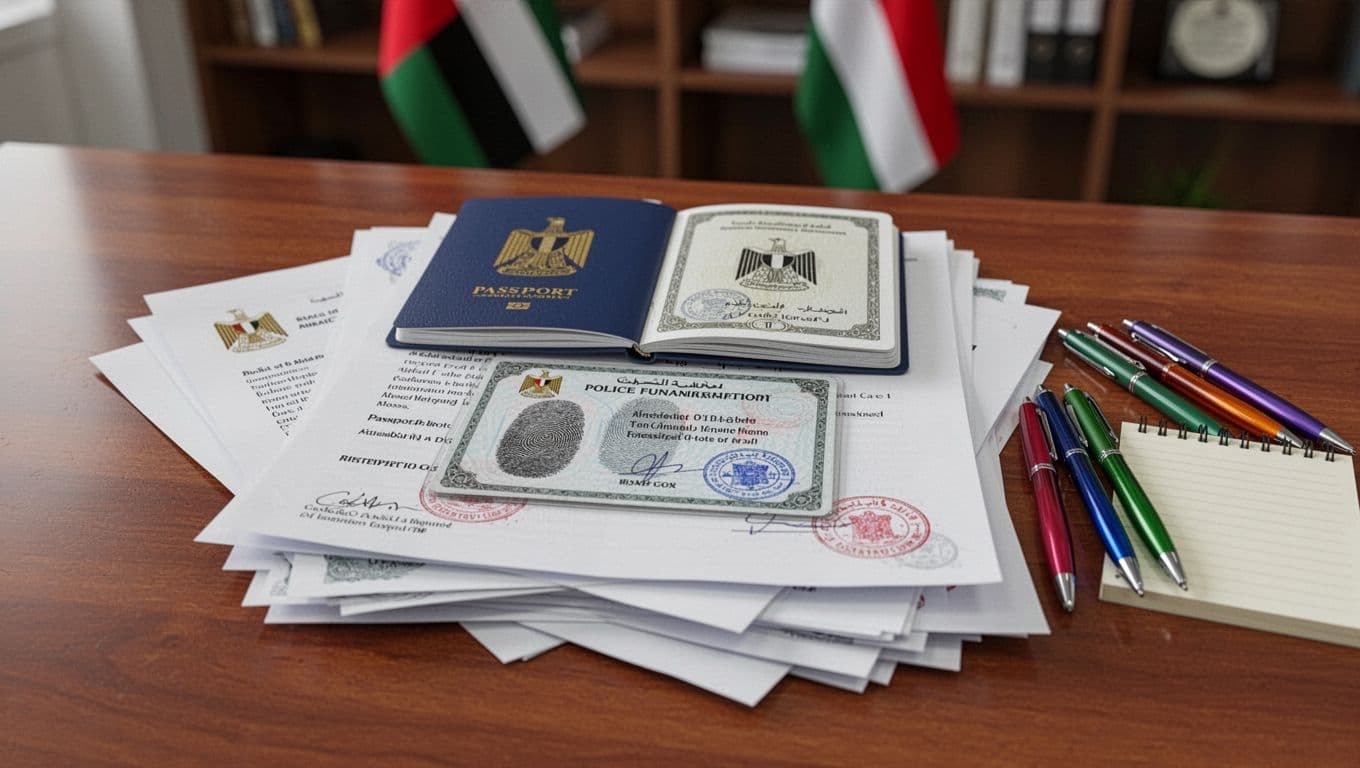
For many first-time UAE hires, the home-country PCC is the one that takes longer. It can also involve legalization steps before a UAE employer accepts it. Think of legalization as a chain of trust, each stamp supports the one before it.
A common misconception is that “apostille fixes everything.” In reality, employers may still ask for UAE embassy attestation depending on where the document is issued and where it will be used. Because rules vary, confirm the exact legalization path with HR before you spend money.
The usual document chain: issue, notarize, foreign ministry, UAE embassy, translation (if asked)
While the order can vary by country, many candidates see a sequence like this:
- Issue: the police authority or national agency produces your PCC.
- Notarize (sometimes): confirms copies or signatures, when required in your country.
- Foreign ministry authentication: your government confirms the document is genuine.
- UAE embassy attestation: the UAE validates that government authentication for UAE use.
- Translation (only if asked): some employers request Arabic translation, but don’t pay for it until HR confirms.
Waiting for HR’s instruction on translation is a real money-saver. Some teams accept English documents, others need Arabic, and some only need translation for specific job categories.
If you’re moving from a visit status to employment status while handling these documents, this guide on status change from visit to employment visa can help you avoid timing conflicts between visa deadlines and PCC issuance dates.
Country examples people search most: India, Philippines, Pakistan, UK, and US
People often search by country because the issuing office and delays differ. Here are quick, practical starting points and the delay that shows up most.
- India: PCC often comes through Passport Seva or local police verification, delays often come from address verification and appointment backlogs.
- Philippines: PCC commonly comes from the NBI clearance process, delays often come from name “hits” that require manual review.
- Pakistan: PCC often comes from local police offices (and related identity systems), delays often come from district processing and stamp sequencing for attestation.
- UK: PCC is commonly requested through ACRO, delays often come from address history checks and peak application periods.
- US: many UAE employers ask for an FBI Identity History Summary (often via an approved channeler), delays often come from fingerprint quality and mailing time if you choose paper delivery.
For a business-friendly UAE context that also mentions documents and common requirements, this overview of a police clearance certificate in Dubai offers helpful background, especially if your employer frames it as a “good conduct” document.
Common PCC delays in 2026, plus simple ways to avoid them
Delays usually come from small mismatches that trigger manual review. The good news is that most are preventable if you treat your PCC like a data-matching exercise, not a paperwork chore.
Also remember the calendar. Public holidays, peak hiring seasons, and embassy closures can add days. If your joining date is fixed, build buffer time, especially for fingerprint steps outside the UAE.
Top reasons applications get stuck
Across UAE PCCs and home-country PCCs, these are the repeat offenders:
- Typos and name order changes (given name vs surname, missing middle name)
- Wrong passport number or old passport number used by mistake
- Old UAE visa history missing (ex-residents sometimes forget to upload a prior visa page)
- Wrong certificate purpose selected (employment vs abroad use)
- Blurry scans or cropped documents
- Rejected fingerprints (smudged, incomplete, or poor contrast)
- Missing UAE embassy stamps on fingerprint cards or PCC legalization chains
- Expired PCC because the issue date fell outside the accepted window
If your name isn’t identical on every document, the system treats you like two people. Fix the spelling first, then apply.
A quick pre-submission checklist to speed up approval
Before you hit submit, run this fast check:
- Match your full name to your passport (spacing, order, and middle names).
- Confirm date of birth and passport number character by character.
- Use the same email and phone on every portal form.
- Scan in color, sharp focus, no shadows, no cropped edges.
- Keep uploads within the portal’s file size limits (compress without blurring).
- For ex-residents, confirm the fingerprint card has all stamps and clear prints.
- Apply inside the accepted window (often about 90 days, sometimes less).
- Save your tracking number and payment receipt.
If you’re delayed, act quickly. Contact the portal support channel, tell HR the status and ask for a deadline extension, then re-submit corrected files the same day when possible.
Conclusion
A Police Clearance Certificate sounds simple, yet timing and document matching make it tricky. Start by confirming which document you need, a UAE PCC, a home-country PCC, or both. Then apply close to the submission date so the 90-day validity doesn’t work against you. In 2026, UAE residents can often get a UAE PCC online in 24 to 48 hours, while ex-residents should plan extra time for fingerprints and UAE embassy attestation. Most delays come from name mismatches, unclear scans, missing stamps, or the wrong certificate purpose.
Confirm requirements with HR or your sponsor today, start the paperwork early, and keep clean digital copies ready. That one habit prevents the most common last-minute scramble.
