

Medical Fitness Test for UAE Work Visa 2026: What Happens, What Fails, and How to Prepare
If you’re applying for a UAE work visa in 2026 (or renewing one), the medical fitness test is not optional. You need a medical fitness result before immigration can issue or renew your residence and employment status. For most people, the outcome is simple: “fit” or “unfit”.
Still, the experience can feel stressful because details vary. Your emirate matters, your job category matters, and your timing matters. In 2026, most centers run the process digitally, so you usually book online (often using UAE PASS), then get updates by SMS or email.
This guide sets expectations before you walk in. You will learn what happens at the medical fitness center, which health findings commonly fail the test, and how to prepare so paperwork problems or follow-ups don’t delay your visa timeline. If you’re still planning your entry and status, it also helps to understand UAE visa policy updates 2025-2026 for job seekers.
What happens during the UAE medical fitness test in 2026, step by step
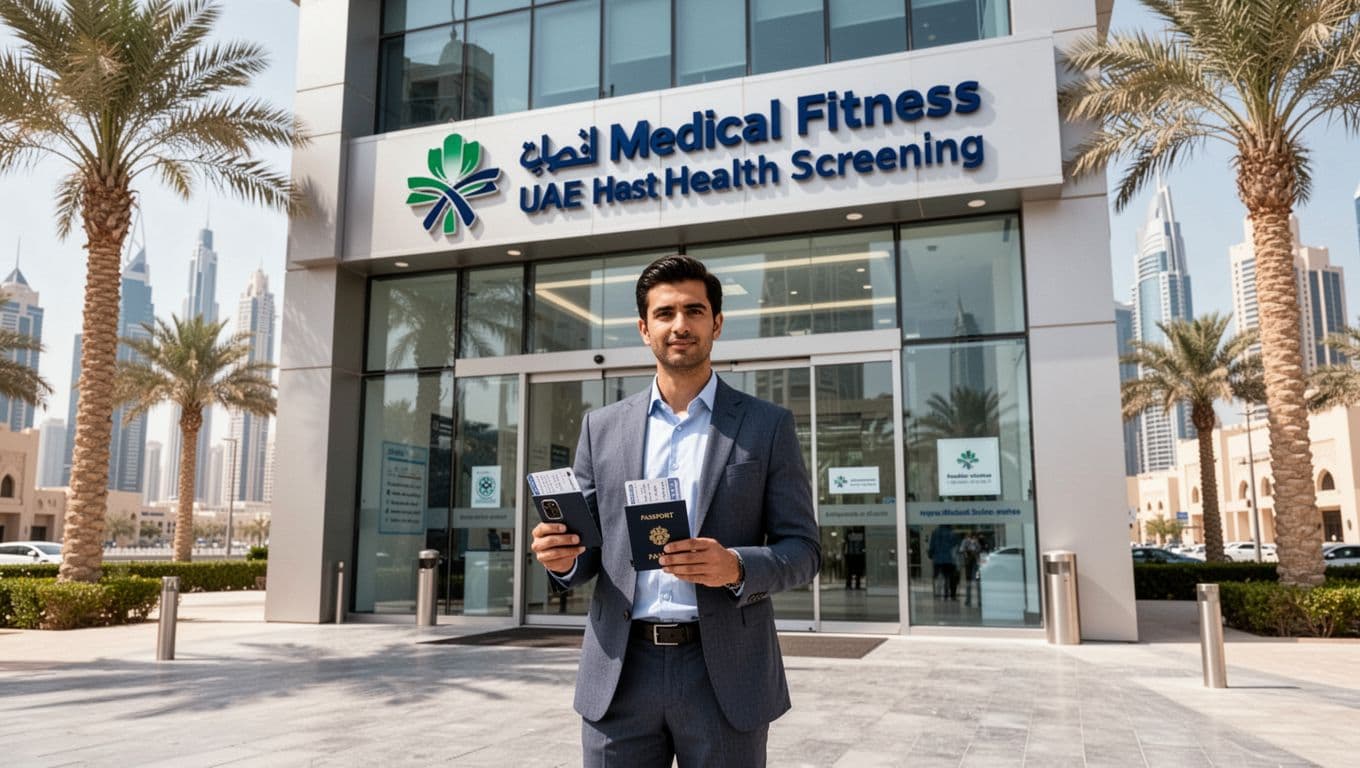
The UAE only accepts medical fitness results from approved government health authorities, and the system differs by emirate. For example, Dubai uses Dubai Health Authority (DHA) channels, Abu Dhabi uses SEHA channels, and several northern emirates use Emirates Health Services (EHS) systems. Because of that, you should test in the emirate linked to your visa file unless the official process clearly allows otherwise.
In 2026, the full flow usually looks like this:
First, you book an appointment through the official app or website for your emirate. Many applicants sign in with UAE PASS, then pick the center, date, and service speed (standard or VIP, if offered). After booking, save the confirmation and reference number.
Next, plan to arrive early. Many centers run like airport check-in. The line moves, but the queue grows fast. At reception, staff will verify your identity, check your visa type, and confirm the job category linked to your work permit. Then you pay the required fees (prices vary by emirate, service level, and whether you choose express processing).
After registration, the center sends you through the required tests. For most applicants, that means a blood test and a chest X-ray for tuberculosis screening. Some roles add more blood screening, depending on public health risk and job duties.
Finally, a doctor or authorized reviewer signs off the file. Results are usually shared electronically with immigration systems, while you receive a notification. A standard timeline is often 24 to 48 hours, although it can take longer during peak periods. Many centers also offer faster processing (sometimes same day) for an extra fee.
A smooth medical fitness visit is mostly about matching your documents and job category to the correct emirate system.
Booking, documents, and fees, what to bring so you do not get turned away
Most problems happen before the blood draw. They happen at the counter, when details don’t match.
Bring the basics, and bring them in the right format:
- Passport (original) and a clear copy
- Entry permit or visa copy (new visas), or residence visa copy (renewals)
- Emirates ID (original) for renewals or status updates inside the UAE
- Passport photo(s) if the center still requests them (some are fully paperless, others aren’t)
- Booking confirmation on your phone (screenshot helps)
- Any insurance proof if your emirate or employer asks for it during processing
Before you go, check your spelling and numbers. A single wrong digit in a passport number can delay the file, or force a re-registration. Also confirm you chose the correct emirate and visa type during booking. If your work permit is issued under a different emirate than where you’re physically staying, ask your employer or PRO which center and system you must use.
Keep soft copies on your phone, but don’t rely on signal or battery. Save screenshots and carry a power bank if possible. A few minutes of preparation can prevent a wasted appointment.
The tests you will actually do (blood test, chest X-ray, and sometimes more)
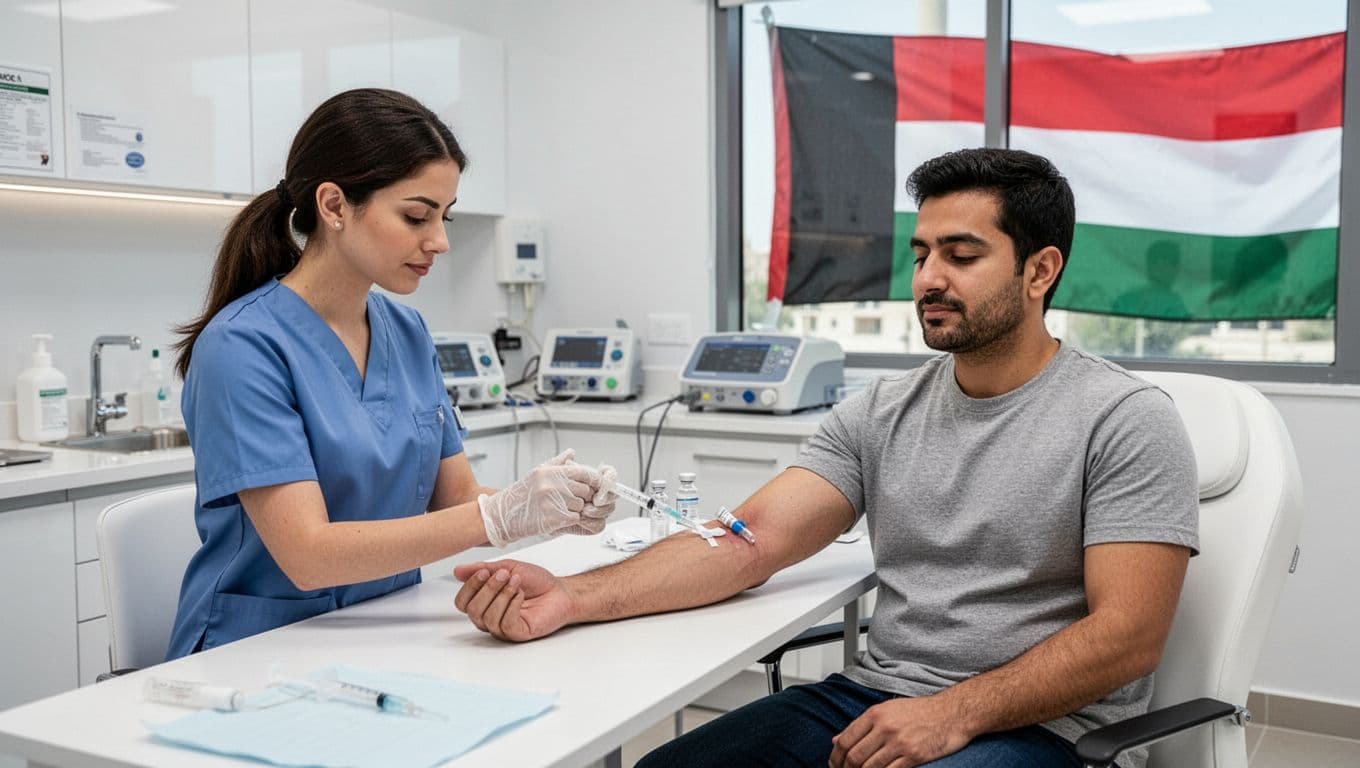
For most work visa applicants, the center will do two core checks:
A blood test screens for communicable diseases based on your job category. A chest X-ray screens for tuberculosis (TB) signs, which matters for both new visas and renewals.
Job type changes what gets added. Centers often group roles into categories (names vary), but the idea stays the same: roles with closer contact to households, clients, or health services usually face broader screening.
Here is a practical way to think about it:
| Job category (common grouping) | Examples | Typical screening |
|---|---|---|
| Category A (office, low public health risk) | office staff, admin, many corporate roles | blood test plus chest X-ray (TB) |
| Category B (domestic and household-related) | domestic workers, nannies, some drivers, cleaners | blood test plus chest X-ray, often includes HIV, syphilis, Hepatitis B, and pregnancy test for women |
| Category C (close-contact personal services) | salon, spa, gym, some health-related support roles | blood test plus chest X-ray, often includes extra communicable disease screening such as syphilis and Hepatitis B |
Pregnancy affects the chest X-ray decision. In many cases, the clinic will avoid or delay X-ray for pregnant applicants based on medical guidance and local procedure. If you might be pregnant, tell the staff before the X-ray step. That one sentence can prevent a stressful situation later.
What fails the UAE work visa medical test, and what “unfit” really means
The medical fitness test is not a full health check. It focuses on public health risk, mainly communicable diseases that can spread or require close monitoring. That focus explains why someone can feel healthy and still receive an “unfit” result.
In practice, “unfit” means you did not meet the UAE medical fitness requirement for issuing or renewing the work residence visa. Immigration then pauses or stops the visa process, and the center provides the next steps. The first notification you receive is often basic, usually just “fit” or “unfit”. Details and follow-up instructions come through the official center channels.
Keep expectations realistic. A medical fitness result is not a negotiation, and it is not something you can fix with paperwork alone. If the center flags a finding, they may request confirmatory testing, a specialist review, or follow-up imaging. That can add days to your timeline.
Treat the test like a compliance checkpoint. The goal is a clean, correct file with no missing information.
Conditions that commonly lead to an “unfit” result
The most common causes are tied to infectious disease control. The exact list depends on your job category and emirate procedure, but these are widely known triggers for an “unfit” result in employment visa medical screening:
- HIV: A positive result generally leads to an unfit decision for employment visa medical fitness.
- Active tuberculosis (TB): Active TB usually results in unfit, because it requires treatment and public health management.
- Signs linked to prior pulmonary TB (often for new visas): Some chest X-ray findings can trigger follow-up, and in some cases they lead to unfit for new applicants.
- Drug-resistant TB requiring extended treatment: These cases often involve strict follow-up and may block standard visa processing.
- Hepatitis B (commonly for Category B and C roles): Many close-contact roles include Hepatitis B screening, and positive results can lead to unfit based on role requirements.
- Syphilis (commonly for Category B and C roles): Screening is common in domestic and personal service roles, and positive results can affect fitness status.
- Leprosy: A positive finding is treated as a serious public health issue in visa medical screening.
- Pregnancy for female domestic workers in some cases: Pregnancy can affect employment decisions and the visa pathway for certain household roles, depending on current procedure and sponsorship choices.
This is not about blame or lifestyle. It is about whether the role and the public health rules allow visa issuance under the medical fitness framework.
Gray areas and special cases: TB scars, conditional fitness, retests, and job-category mismatches
Not every flagged result ends in a hard stop. TB is the best example. Some applicants show old scarring or findings that suggest prior infection, even when they feel fine. In these cases, the center may request extra testing or a specialist review. Depending on findings and local policy, some people receive a form of monitored clearance (often tied to follow-up). In other cases, the file is marked unfit, especially for new employment visa issuance when the risk is treated more strictly.
Job-category mismatches also cause delays. If your work permit says one role, but the booking or file shows another, the center may add tests or hold results until the category is corrected. That can happen during job changes, promotions, or when employers use broad titles.
If you believe a result is incorrect, act fast and stay official. Ask the center about confirmatory testing and the formal re-exam process. Don’t jump to unofficial “solutions”. They waste time, and they can create bigger immigration issues.
How to prepare and avoid delays, from the week before to test day

You can’t “prepare” by trying to beat a medical test. You can prepare by avoiding delays, missed appointments, and preventable follow-ups.
Start with timing. If you are renewing, book early enough to handle the unexpected. TB-related follow-up, category corrections, and public holidays can stretch a simple test into a multi-visit process. Many people aim to complete medical fitness 2 to 3 weeks before the final visa deadline, because it gives breathing room.
Also confirm whether the center asks for fasting. Many do not, but some blood work instructions still request an 8 to 12-hour fast. The booking page or confirmation message usually says what to do. If it does not, call the center or check the official app guidance.
If you’re inside the UAE on an entry permit or visit visa while your employer is converting your status, align your medical timing with the visa steps. For a clear overview of that sequence, see how to convert visit visa to work visa in UAE.
The week before: smart prep for faster results and fewer surprises
A week out, focus on reducing friction:
Confirm your job category with your employer or PRO, then book the matching service. Next, gather your documents and make sure the name on your passport matches the name used in the booking.
If you had TB treatment in the past, bring any medical reports you still have. Even partial documentation can help a doctor interpret old findings. Meanwhile, avoid last-minute travel that could force you to miss follow-up appointments. If the center requests extra checks, you want flexibility.
Pregnant applicants should disclose pregnancy early, before any imaging step. That protects you and helps the center choose the safest path.
Finally, plan time away from work. The appointment itself can be quick, but queues, registration, and X-ray waiting time can stretch the visit.
Test day tips: what to wear, what to eat, and what to do right after
Choose clothing that makes the X-ray easy. A simple top without metal parts helps, and it saves time. Drink water, because hydration makes blood draws easier. Also avoid intense exercise right before the appointment, since it can leave you lightheaded.
Aim to arrive 15 to 20 minutes early. Keep your phone charged because some centers use digital forms, QR codes, or SMS confirmations at check-in. After payment, save the receipt and reference number, since they help with tracking.
Once you leave, watch for the official SMS or email. In many cases, the result also moves electronically to immigration systems, and your employer or typing center can proceed with the next visa step.
Conclusion
The UAE medical fitness test for a work visa in 2026 is predictable when you treat it like a process, not a mystery. Book under the correct emirate and job category, bring the right documents, and expect a blood test plus a chest X-ray in most cases. Know the common “unfit” triggers, which are mainly communicable diseases, so you understand what the system is screening for. Also plan extra time for renewals or any TB follow-up, because those are common sources of delay.
Your next step is simple: confirm requirements with the approved medical fitness center in your emirate, then start early so your work visa timeline stays on track.
