

Browse the latest job vacancies in Dubai, UAE. From healthcare and aviation to construction and office roles — all sectors, updated every day, completely free.
All current openings tagged in Dubai — apply before they're filled.
 Full Time
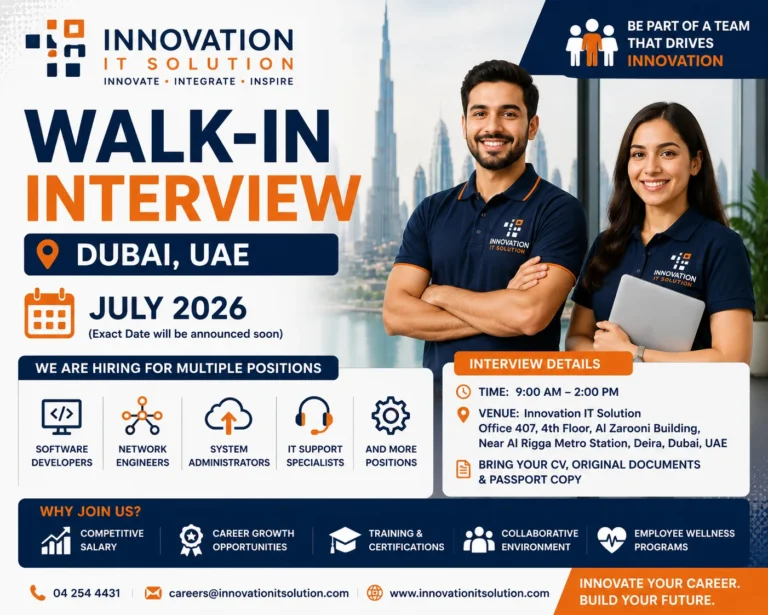
 Innovation IT Solution will hold a Dubai walk-in interview on July 9, 2026, for Tele Sales Executiv…
 Full Time
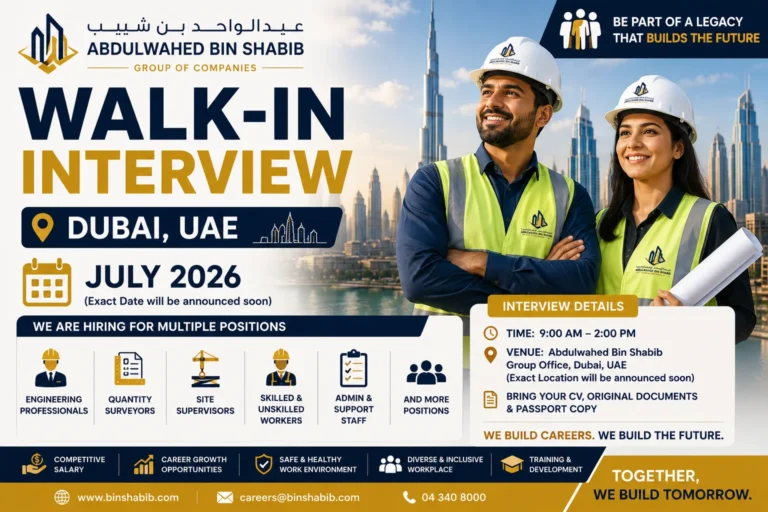
 The Abdulwahed Bin Shabib walk-in interview in Dubai is a direct walk-in hiring event for candidate…
 Full Time
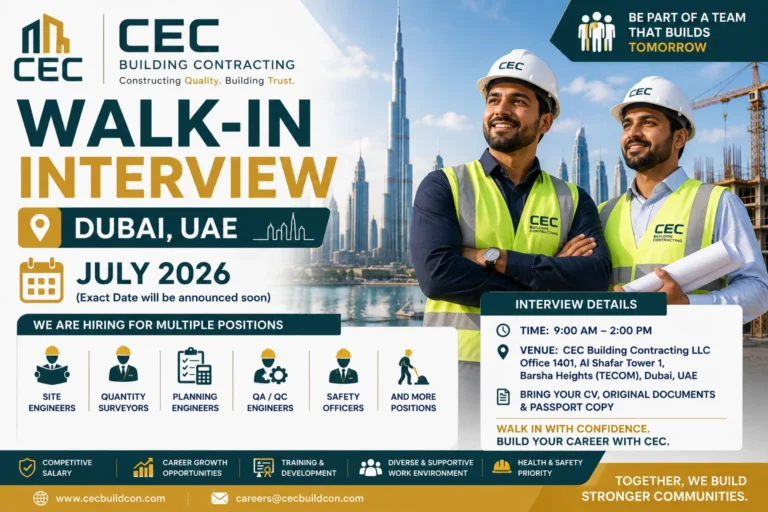
 CEC Building Contracting has a walk-in interview in Dubai on Sunday for drivers, civil foremen, car…
 Full Time
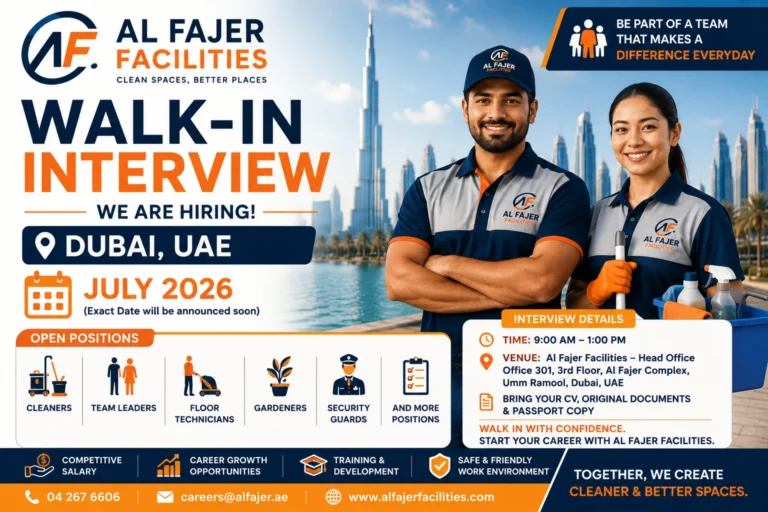
 If you're searching for the Al Fajer Facilities walk-in interview in Dubai, you likely want the key…
 Full Time
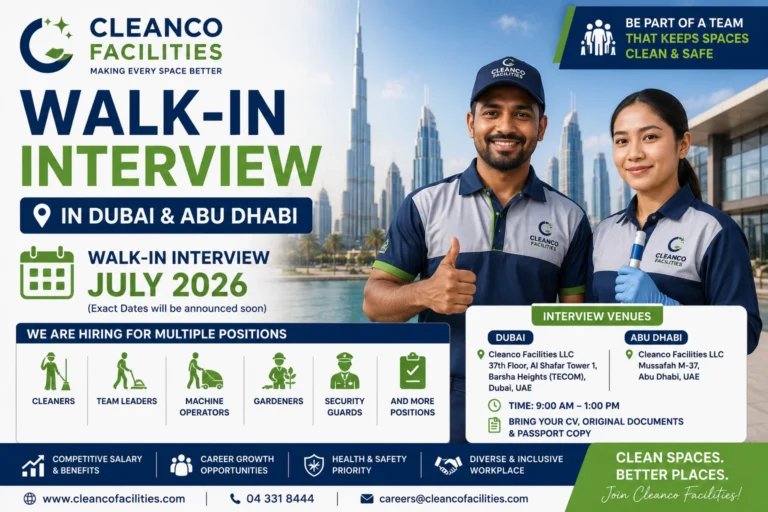
 Cleanco Facilities walk-in interview on Saturday in Dubai and Abu Dhabi. Check roles, salaries, ven…
 Full Time
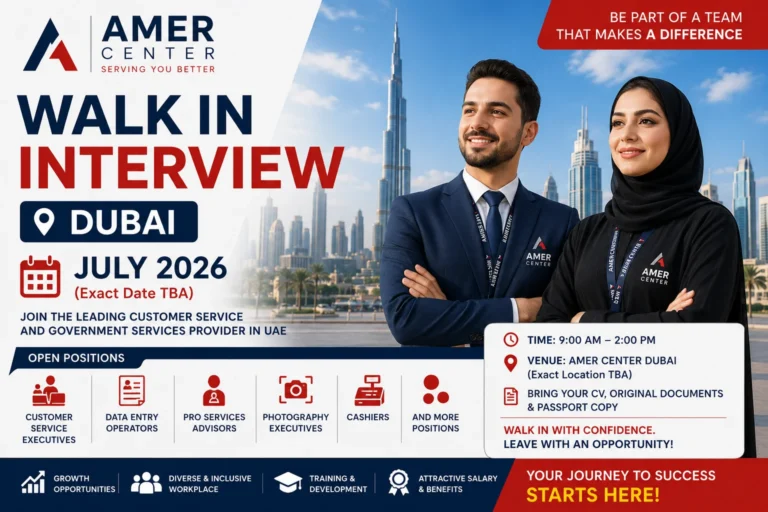
 Amer Center Dubai Airport Freezone has a walk-in interview in Dubai on 2nd July 2026 for customer s…
 Full Time
 If you're looking for a Binghatti walk in interview update you can act on fast, this hiring day in …
 Full Time
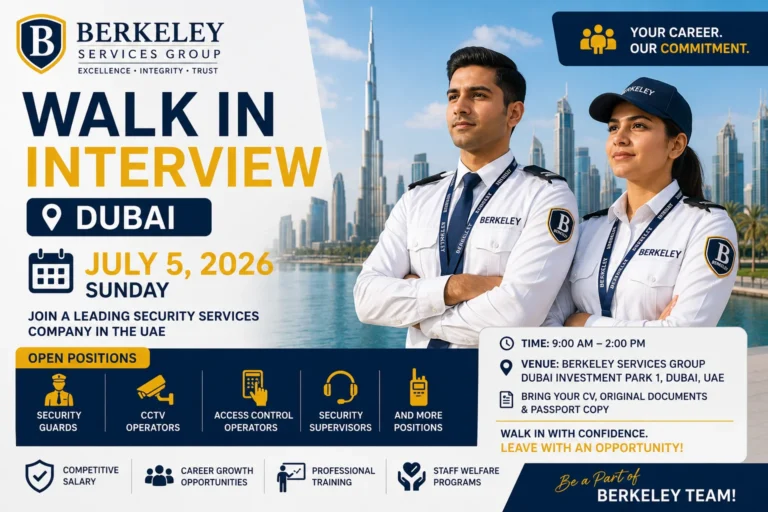
 Berkeley Services Group will hold a Dubai walk-in interview on July 5, 2026 for Housekeeping Attend…
 Full Time
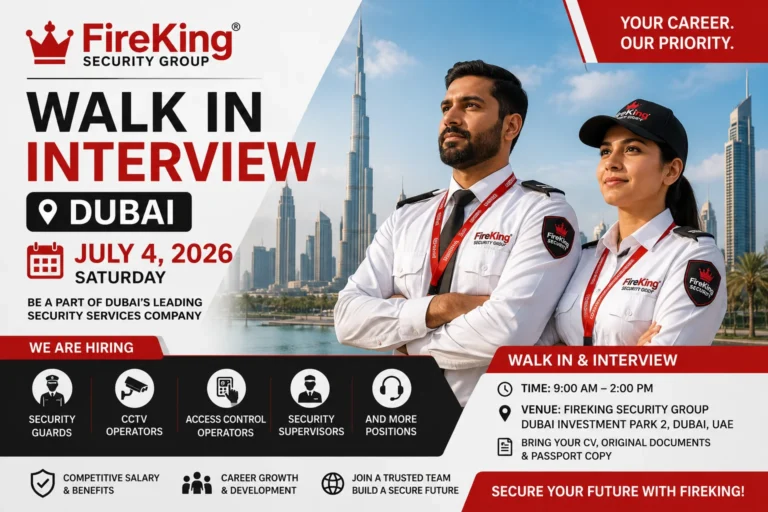
 A new FireKing walk-in interview in Dubai gives job seekers a direct chance to meet recruiters for …
 Full Time
 Hiring at ADNOC jobs in UAE 2026 is drawing attention for a simple reason, the openings cover far m…
 Full Time
 Cruise jobs are getting more attention in 2026, and the reason is simple. More ships are hiring, gu…
Jobs in Dubai stay at the top of search lists because the city still draws fresh hiring across major sectors, even in 2026. The market is active, but it’s competitive, so you need to target the right roles, not send out random applications.
Freshers can still find openings in hospitality, sales, retail, admin, and support work, while experienced candidates often have better chances in healthcare, finance, logistics, construction, and tech. If you want a focused lead, Dubai Health Authority job openings are one example of how specialized roles can open up for the right applicants.
In the sections below, you’ll see which job types are hiring, what salaries can look like, which skills employers want, how to apply the right way, and how to spot job scams before they waste your time.
Dubai keeps drawing job seekers because it offers a mix that is hard to find in one place: stronger pay potential, a global work environment, and steady mobility across industries. For many people, that makes the city feel practical rather than just popular.
The appeal is not the same for everyone. Still, if you want a market where your skills can move quickly and your experience can carry weight across borders, Dubai stays near the top of the list. The city also rewards people who plan well, because employers often look for clear experience, strong communication, and a solid professional profile.
Dubai is different from nearby markets because it gives workers broader exposure to multinational employers and international work standards. In many neighboring cities, opportunities can feel more localized. In Dubai, you are more likely to work with teams, clients, and managers from different countries.
That matters for career growth. A role in Dubai can open doors to regional transfers, better titles, and wider professional networks. Many companies also use global systems for hiring, reporting, and performance, so your experience can carry more value later.
The city also offers more movement between sectors. A candidate who starts in retail, hospitality, or admin can often shift into customer service, operations, or sales with the right performance. That kind of mobility is one reason many professionals keep watching Dubai salary trends for 2025-2026 before making a move.
Dubai attracts candidates who want more than a paycheck. They want experience that looks strong on a CV and works across markets.
Another advantage is the business mix. Dubai has local companies, regional offices, and international brands in the same market. As a result, job seekers can target smaller firms, large employers, and fast-growing businesses without leaving the emirate.
Job seekers with in-demand skills usually get the best results. Employers in Dubai pay close attention to experience in areas like sales, operations, logistics, healthcare, finance, tech, and customer support. If your skill set solves a real business need, you have a better chance of getting shortlisted.
Bilingual candidates also stand out. English is widely used, but Arabic, Hindi, Urdu, French, and other language skills can help in customer-facing roles. In many cases, language ability can separate two similar CVs.
Experienced professionals often do well too, especially when they can show consistent results. Employers want people who can start quickly and handle responsibility with less training. That often helps mid-level candidates more than fresh applicants in competitive roles.
Recognized certifications can also make a difference. Some employers prefer candidates with verified training in areas such as accounting, safety, health care, IT, project work, or technical trades. If you work in a regulated field, the right certificate can move your application ahead fast.
Here are the types of candidates who usually have an edge:
The market is selective, but it still rewards the right profile. That is why many job seekers also check free zone vs mainland jobs in the UAE before applying, since company type can affect mobility, benefits, and hiring style.
If you are aiming for Dubai, focus on how your background matches employer needs. A clear CV, relevant skills, and proof of performance usually matter more than a long list of job applications.
Dubai’s hiring market in 2026 still leans toward roles that support daily business, customer service, and growth. If you are searching for work here, focus on the jobs employers keep filling again and again, because those are the openings that move fastest.
The strongest demand sits in four groups: office support, technical roles, hospitality and retail, and site-based jobs. Some of these positions suit freshers with good presentation and communication skills, while others need a strong work history or formal training.
Office and support jobs remain some of the most common openings in Dubai. Employers keep hiring for receptionist, office assistant, admin assistant, customer service, and front-desk roles because every business needs people who can keep operations organized and clients handled well.
These jobs usually ask for strong communication, basic computer skills, and a professional attitude. A calm voice, neat appearance, and polite behavior often matter just as much as experience.
Many candidates start here because the entry barrier is lower than in technical fields. Still, employers want people who can handle emails, answer calls, manage files, use spreadsheets, and deal with visitors in a steady way.
Common tasks in these roles include:
If you want a stable starting point in Dubai, these jobs are a practical choice. They often lead to better roles later in operations, coordination, or office management.
Dubai also has steady demand for skilled professionals in fields that need stronger qualifications or proven experience. These roles include IT, software, cybersecurity, cloud, data, accounting, engineering, and project management.
Companies in these sectors usually want candidates who can work with less supervision. They look for degrees, certifications, and a track record that shows real results, not just interest.
In tech, the need is strong for software developers, support engineers, cloud specialists, data analysts, and cybersecurity staff. In business roles, accountants, auditors, and finance professionals stay in demand across trading firms, service companies, and large employers.
Engineering and project management jobs also remain important because Dubai keeps pushing ahead with construction, infrastructure, and business expansion. These roles often require a license, technical training, or years of hands-on work.
A quick view of the most active skilled roles looks like this:
| Area | Common jobs | What employers usually want |
|---|---|---|
| IT and software | Developer, support engineer, tester | Coding skills, problem-solving, experience |
| Cybersecurity and cloud | Security analyst, cloud engineer | Certifications, systems knowledge, careful work |
| Data and finance | Data analyst, accountant, auditor | Accuracy, tools knowledge, reporting skills |
| Engineering and projects | Civil engineer, project manager | Qualifications, site experience, planning skills |
These jobs often pay better than entry-level support work, but the hiring bar is higher too. If you want one of them, a strong CV and proof of experience matter a lot.
Dubai’s tourism and retail sectors still create steady hiring across hotels, restaurants, malls, and customer-facing businesses. That means hotel jobs, restaurant roles, sales staff, cashiers, and support staff continue to appear often.
This part of the market stays active because visitors keep coming, shops keep selling, and service standards remain high. Employers need people who can deal with customers politely and work well under pressure.
Front-line workers do best here, especially those with a good attitude and a clean, professional image. Many hotel and retail employers also look for flexibility, since shifts, weekends, and holiday work are common.
Typical openings in this group include:
In Dubai, customer-facing work often stays busy because tourism and retail never sit still for long.
If you are starting out, these jobs can be a useful entry point. They are often easier to access than skilled office roles, and they can build experience fast.
Driver, labor, and site-based work also hires consistently in Dubai. These roles include driver jobs, warehouse work, construction labor, maintenance, and helper positions.
Employers in this area care most about reliability. They want people who show up on time, follow instructions, and can handle physical work without constant supervision.
For driver jobs, a valid UAE license and knowledge of local roads can make a big difference. Warehouse and logistics jobs often need basic organization, lifting ability, and careful handling of goods. Construction and maintenance roles may also require safety awareness, tool handling, or trade experience.
Here is what usually matters most:
These jobs may not get the same attention as office or tech work, but they stay essential. Dubai’s transport, trade, and construction activity keeps them active year-round.
If you are applying for this type of work, keep your documents ready, stay honest about your experience, and show that you can work safely and consistently. Employers notice that quickly.
Dubai’s hiring market is still broad, but a few sectors are moving faster than others. If you focus on the strongest industries, you save time and raise your chances of landing a real interview.
At the top of the list are jobs tied to technology, healthcare, and construction. These areas need both experienced professionals and qualified support staff, which keeps demand active across different salary levels and job types. For a wider view of market shifts, Dubai job market stability trends 2026 also gives useful context on where demand is holding firm.
Dubai employers are hiring hard for AI, software development, cloud, cybersecurity, and data roles. The reason is simple: companies want people who can solve real problems, protect systems, and improve performance with less guesswork.
This also explains why digital skills matter more than ever. Businesses want staff who can work with data, secure systems, build products, and support online operations. If you can show hands-on ability, not just a certificate, your application usually gets more attention.
Common roles in this sector include:
Employers in Dubai are moving toward skills-first hiring, so practical experience often matters more than job titles alone.
For job seekers, this means a sharper CV, stronger project examples, and proof of tools you can actually use. A portfolio, GitHub profile, or certification can help, especially if you are targeting mid-level roles. In many cases, tech hiring also connects with sales and product teams, so communication skills matter too.
Healthcare remains one of Dubai’s most stable hiring areas. Hospitals, clinics, and medical centers keep looking for nurses, doctors, lab staff, pharmacists, and support workers because patient care needs steady staffing.
These jobs are more regulated than many other sectors. Employers usually want the right license, recognized qualification, and relevant experience before they even shortlist a candidate. That makes the hiring process stricter, but it also makes the field more reliable for qualified applicants.
If you are applying in healthcare, check these points first:
Support roles also matter here. Medical receptionists, ward assistants, and administrative staff help clinics run smoothly, so they remain part of the wider hiring picture. If you are aiming for this field, Dubai Health Authority job openings are worth tracking because regulated healthcare employers often hire in waves.
Dubai’s long-term development keeps construction, engineering, and green jobs in steady demand. New projects, infrastructure upgrades, and renewable energy work all need people on site and behind the scenes.
This includes civil engineers, site supervisors, project staff, MEP workers, safety officers, quantity surveyors, and skilled labor. Employers in this space usually want proven site experience, because timing, quality, and cost control matter on every project.
Green hiring is also gaining ground. Renewable energy projects and sustainability-focused developments need workers who understand modern building methods, efficient systems, and safety standards. That creates more room for engineers and technical staff with practical experience.
Dubai’s growth plan supports this hiring pattern over the long term. As new residential towers, roads, commercial spaces, and energy projects move ahead, these roles stay active. For many job seekers, that makes construction and engineering a steady path, not a short-term trend.
Dubai still gives freshers a real path into the job market, especially if you focus on entry-level roles and apply with a clean, simple profile. Many employers are open to candidates with little experience as long as they show good communication, basic computer skills, and a strong work ethic.
The best results usually come from applying to jobs that match your current experience level. That means looking beyond high-skill roles and targeting positions where attitude, reliability, and quick learning matter most.
Freshers in Dubai often get started in jobs that need limited experience but still teach useful workplace skills. These roles can build confidence, improve communication, and open the door to better jobs later.
Common beginner-friendly jobs include:
These roles are a smart starting point because they usually have simpler hiring standards. They also help you build practical experience in a busy market, which matters when you want to move into a better title later.
Some employers hire freshers directly for retail and customer-facing work. For example, Sharaf DG entry-level retail jobs can be a useful path if you want to start in sales or store support. Large retailers and hypermarkets also offer regular openings, and Union Coop jobs for fresh graduates are another good example of that type of hiring.
If you are new to Dubai, start with jobs that train you while you work. That first role can shape your next one.
You do not need years of experience to get noticed, but you do need to present yourself well. A neat CV, basic skills, and a serious approach can make a big difference.
A few steps help right away:
It also helps to keep your CV focused on the job title you want. If you are applying for admin work, use terms like admin assistant, office support, or data entry in your profile where they fit naturally. That makes your CV easier for recruiters to scan.
Short practice also matters. Rehearse a simple self-introduction, keep your contact details correct, and reply quickly if a recruiter contacts you. In Dubai, fast responses often help more than fancy wording.
A few extra habits can improve your chances:
If you are still building your profile, focus on one or two job types instead of applying everywhere. That makes your search sharper and your CV stronger. For more general job hunting, a solid Dubai CV guide can help you shape your application before you send it out.
Many beginners think experience is the only thing employers want. In reality, employers often hire people who look ready, reliable, and easy to train.
Dubai salaries vary a lot, and that is the first thing job seekers should understand. A receptionist, a nurse, a project manager, and a senior engineer can all earn very different pay in the same city.
Your salary usually depends on the job, the sector, your experience, and the total package. In Dubai, a good offer is often about more than the monthly figure. Benefits can change the real value of the job in a big way.
| Job level or type | Typical salary range |
|---|---|
| Entry-level support roles | AED 3,000 to AED 6,000 |
| Freshers in retail, hospitality, or admin | AED 3,500 to AED 7,000 |
| Mid-level professional roles | AED 8,000 to AED 18,000 |
| Skilled specialists and experienced staff | AED 15,000 to AED 30,000+ |
| Senior finance, tech, and leadership roles | AED 25,000 to AED 60,000+ |
These figures shift by employer and sector. A smaller company may pay less cash but offer housing or transport. A larger employer may pay more salary but fewer extras.
Experience is one of the biggest pay drivers in Dubai. Freshers usually start lower, while workers with a solid track record can ask for more. Employers also pay more when they need someone who can handle the job with little training.
Qualifications matter too. A degree, diploma, or professional certificate can raise your value, especially in fields like healthcare, accounting, IT, and engineering. For regulated jobs, the right license can matter as much as experience.
Job type makes a clear difference. Customer support, admin, and retail roles often pay less than technical, medical, or finance jobs. At the same time, shift work, weekend work, or site-based work can sometimes bring extra pay or allowances.
Employer profile also shapes salary. Large multinationals, government-linked employers, and top-tier brands often pay more than smaller firms. Still, smaller companies may offer faster growth or a wider range of responsibilities.
If you want a useful comparison point, top salary roles in UAE can help you see how pay changes across sectors.
A higher salary is useful, but the full offer matters more. Look at pay, benefits, workload, and growth together.
Many Dubai employers build value through benefits instead of higher cash pay. That is common in hospitality, construction, healthcare, and some office jobs. So before you accept an offer, check the full package carefully.
Common benefits include:
The smartest way to compare offers is to calculate the real monthly value. For example, AED 7,000 with housing and transport may be better than AED 8,500 without them. That matters even more if rent is not covered.
You should also ask about overtime, probation terms, and end-of-service benefits. These details affect your real take-home value just as much as the headline salary. If a recruiter avoids clear answers, treat that as a warning sign.
For salary fairness, compare the offer with similar jobs in the market and not just the number on the contract. The right package should match your role, your skills, and the cost of living you will carry.
Hiring in Dubai is competitive, so skills matter as much as experience. Employers want people who can do the job well, work with different teams, and adapt fast when work gets busy. That applies whether you are applying for office work, retail, hospitality, or a technical role.
The strongest candidates usually show a mix of soft skills, technical ability, and language skills. In many cases, that balance matters more than a long CV. If your skills match the job closely, you already move ahead of many other applicants.
These skills sit at the center of hiring in Dubai because they affect almost every workplace. Office teams need people who can write clear emails, answer calls, and speak to clients professionally. Retail and hospitality employers look for staff who stay calm, polite, and helpful when customers need support.
Teamwork matters just as much. Many jobs in Dubai involve working with people from different countries, so you need to cooperate, share tasks, and handle feedback without friction. In customer-facing roles, a good attitude can be the difference between a decent employee and a top hire.
Common strengths employers like include:
In Dubai, a skilled worker who communicates well often gets more attention than someone with experience but poor people skills.
If you are building your profile, these abilities should appear in your CV and interview answers. They are especially important for receptionist, sales, front desk, admin, and hospitality jobs.
Dubai employers also want candidates who can handle tools and systems used in daily work. Basic software knowledge is no longer optional in many roles. Even entry-level jobs often ask for Excel, email management, data entry, or CRM system use.
For office roles, Excel, Word, PowerPoint, and simple data handling are still essential. For sales and service jobs, CRM systems help teams track leads, customers, and follow-ups. In technical fields, employers look for job-specific knowledge, safety awareness, and valid certifications.
Here is the kind of ability many employers expect:
| Skill area | What employers want |
|---|---|
| Software tools | Excel, Word, email, CRM systems |
| Data basics | Accurate entry, simple reports, record keeping |
| Safety training | Site safety, equipment handling, compliance |
| Certifications | Role-based proof in IT, healthcare, finance, or trades |
| Technical knowledge | Field-specific tools, systems, and procedures |
A practical guide can help if you want to present these skills better on your CV, such as how to write an effective CV skills section. That matters because recruiters often scan for keywords before they read the full profile.
Technical skills are not only for engineers or IT staff. A store assistant may need POS system knowledge. A warehouse worker may need scanner training. A project coordinator may need scheduling tools and reporting basics. The more relevant your skills are, the easier it is for employers to trust your application.
English is important in many Dubai workplaces because it is the common language in business, retail, hospitality, and admin roles. You do not need perfect English, but you do need to speak clearly, write simple messages, and understand instructions well.
Multilingual ability can give you an extra edge. Arabic is useful in many customer-facing jobs, especially in government-linked offices, retail, healthcare, and service counters. Hindi, Urdu, Tagalog, French, and other languages can also help when employers serve diverse customers.
That extra language skill can make your CV stand out in a crowded market. It shows that you can connect with more people and handle a wider range of customers. In Dubai, that often turns into a real hiring advantage.
If you want to improve your chances further, focus on the skills that match your target job, then present them clearly on your CV and LinkedIn profile. Strong communication, solid technical basics, and the right language mix can make your application much stronger in Dubai’s 2026 job market.
Applying for jobs in Dubai works best when you treat it like a targeted search, not a numbers game. The strongest candidates usually find openings faster because they apply early, match their CV to the role, and use trusted sources instead of chasing every listing they see.
A smart job search also saves time. When you focus on real employers, tailor your documents, and prepare properly, your chances improve fast. That matters in Dubai, where employers often shortlist quickly and expect a clean, professional application from the start.
Start with official company career pages. These are often the safest and most direct places to apply, especially for large employers, hotel chains, retail groups, logistics firms, and healthcare providers. You can also use LinkedIn Jobs, which is useful for both fresh openings and recruiter outreach.
Government portals are another strong option, especially if you want verified listings and public-sector roles. The UAE job portal, MOHRE resources, and other official channels can help you avoid fake offers. For a more focused search, also check trusted UAE job boards and career pages on local sites such as UAE CV format and ATS template guidance, which can help you match the way recruiters screen applications.
A good search routine includes:
If a job sounds urgent but has no company name, no career page, and no clear contact details, slow down and verify it first.
The best results usually come from applying where the employer already has a hiring process in place. That gives your application a better chance of reaching a real recruiter.
Your CV should be short, clean, and shaped for the job you want. In Dubai, recruiters often scan quickly, so the right keywords and a clear format matter a lot. A cluttered CV can hide strong experience, while a simple one makes your value easy to see.
Tailor each CV to the role. Use the same job titles and core skills from the listing where they fit naturally. That helps both recruiters and applicant tracking systems spot your match faster. If you want to improve your format, a tailored CV for UAE jobs gives you a better shot at shortlisting than a generic file.
Make sure your CV includes:
Keep the language direct. Instead of saying you “handled tasks,” show what you did and what changed because of it. For example, mention sales targets hit, files managed, calls answered, or projects completed. Numbers help, even if they are simple ones.
A clean format also matters. Use one font, clear headings, and enough spacing. Employers in Dubai often prefer CVs that are easy to skim on a phone or laptop. If your CV looks busy, it can work against you before anyone reads the details.
Interview prep in Dubai should be practical. Learn the most common questions, know your own CV well, and arrive looking ready for work. Employers want candidates who are prepared, but they also want people who sound natural.
Common questions often include your background, why you want the role, your notice period, and how you handle pressure. Prepare short answers that stay honest and clear. Long rehearsed speeches can sound flat, while simple answers feel more convincing.
Professional dress still matters. Choose clean, tidy clothing that fits the role you want. For office or customer-facing jobs, smart business wear is usually the safest choice. For site-based roles, neat and appropriate clothing still shows respect for the interview.
Punctuality is non-negotiable. Plan to arrive early, especially if the location is new to you. In Dubai, being on time tells the employer that you are reliable before the interview even starts.
To show confidence without sounding fake, keep your tone steady and your answers direct. Use examples from real work, study, or daily tasks. You do not need to sound perfect, you just need to sound prepared and clear.
A few small habits help a lot:
The smartest applicants treat every interview as part of a bigger plan. They apply to the right roles, keep their CV sharp, and show up ready to work. That combination gets noticed faster in Dubai than a stack of random applications ever will.
Job hunting in Dubai can open real doors, but it also attracts fake offers and weak employers. A good rule is simple, if an offer feels rushed, vague, or expensive, treat it with caution.
Scammers often copy real job ads and add pressure. Bad employers may not be scams, but they can still waste your time with unclear pay, poor contracts, or missing benefits. That is why careful checking matters before you share documents or accept any offer. For a broader guide, see common job scams in the UAE.
Some warning signs show up again and again. If you spot them early, you can avoid a lot of trouble.
Watch out for these common signs:
A real job offer should feel clear, not confusing. If you have to guess the basics, step back.
Also pay attention to poor grammar, copied logos, and job ads that repeat the same line again and again. Fake posts often look rushed, like they were built in minutes. Good employers usually give you direct contact details, job duties, and a proper hiring process.
Before you apply or send documents, verify the employer yourself. Start with the company website and look for a real careers page, office address, and contact details. Then compare that information with the job ad.
You should also check the company’s official business details. In Dubai and the UAE, real firms usually have a clear trade license or registered business record. If the recruiter refuses to share basic company information, that is a strong warning sign.
Trusted platforms help too. Apply through official company portals, well-known job sites, or verified employer pages on LinkedIn Jobs. If the listing only appears in a social media message or a random group chat, slow down and confirm it first.
A safe check process looks like this:
If anything still feels off, pause and verify more. A few extra minutes of checking can save you from weeks of stress, lost money, and wasted effort.
Dubai still offers strong job options for freshers and experienced candidates, but the best results come from focus. The safest path is to target growing sectors, match your CV to the role, and apply only through trusted sources.
The market rewards people with real skills, clear communication, and a clean application. If you keep improving your profile and watch the right openings, jobs in Dubai can still lead to solid career growth in 2026.
For beginners, the first step is often an entry-level role that builds experience fast. For experienced workers, the advantage comes from specialization, strong documents, and careful choices that match your long-term goals.