
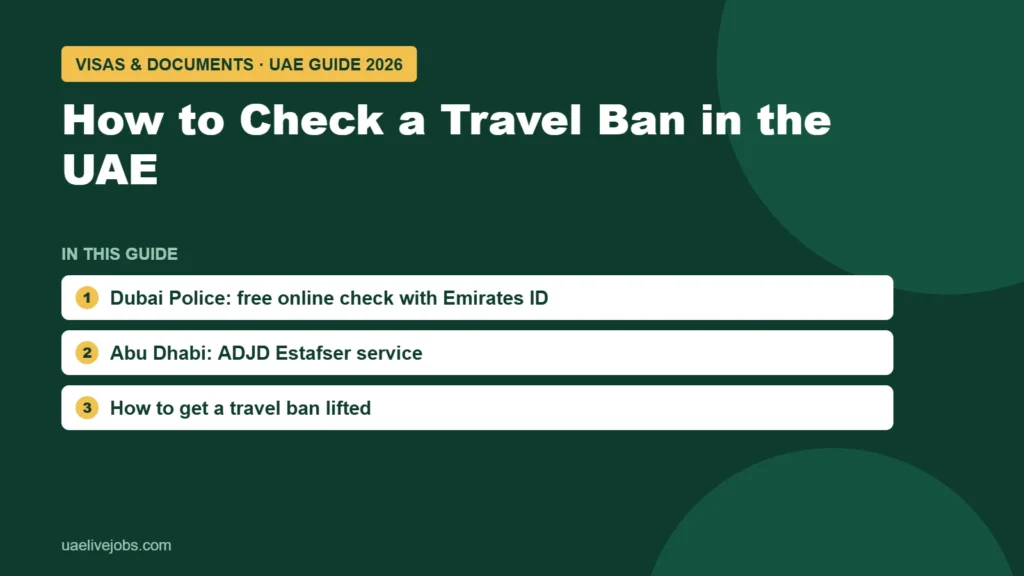
You can check for a travel ban in the UAE for free, and in most cases it takes a few minutes. Which service to use depends on the emirate where the case would have been filed. Dubai Police has an online check for financial cases, Abu Dhabi’s Judicial Department runs a service called Estafser, and the other emirates use their courts or police.
Do the check a few days before you fly, not at the airport. If there is a ban, you won’t get past passport control, and you’ll lose the ticket.
Why people in the UAE get travel bans
A travel ban is an order that stops you leaving the country while a case is open. It usually comes from a court, the public prosecution or the police. The most common reasons are:
- An unpaid personal loan or credit card, once the bank files a case.
- A cheque that bounced, especially a security cheque given to a bank or landlord.
- Unpaid rent or another civil claim that has gone to court.
- A criminal case, even a minor one, while it is being investigated.
- Some family cases, for example to stop a child being taken abroad.
Owing money doesn’t create a ban by itself. Someone has to file a case first. That’s why many people only find out when they try to travel.
How to check a travel ban in Dubai
Dubai Police has a free service called Criminal Status of Financial Cases. It shows financial cases registered at Dubai Police stations and any travel ban linked to them.
- Open the Dubai Police app or go to dubaipolice.gov.ae.
- Go to Services and choose “Criminal Status of Financial Cases”.
- Enter your Emirates ID number.
- Type in the one-time code sent to the mobile number registered with your Emirates ID.
If your mobile number has changed since your Emirates ID was issued, the code won’t reach you. Update it first, or visit a Smart Police Station with your Emirates ID.
This check covers police financial cases in Dubai. A civil case at Dubai Courts, such as a rent claim, may not show here. If you have any open court matter, check it on the Dubai Courts website with your case number too.
How to check a travel ban in Abu Dhabi
The Abu Dhabi Judicial Department (ADJD) runs Estafser, which means “ask” in Arabic. You can use it on the ADJD website or app to ask about travel bans, court cases and financial claims against you. You’ll need your Unified ID (UID) number, which is printed on your residence visa. ADJD says most questions are answered within one working day, and you can ask in English, Arabic or Urdu.
Sharjah, Ajman, Ras Al Khaimah and the other emirates
There isn’t one national check. For the northern emirates:
- Ras Al Khaimah: use the RAK Courts case inquiry on rakdigital.rak.ae if you have a case number.
- Sharjah, Ajman, Umm Al Quwain and Fujairah: check the court or public prosecution services for that emirate, or visit a police station and ask the CID section with your passport and Emirates ID.
If you’ve lived in more than one emirate, or had a loan from a bank in one emirate and rented in another, check each place. A clear result in Dubai doesn’t mean you’re clear in Sharjah.
What to do if you have a travel ban
First, find out who issued it and why: which court or police station, which case number, and who filed it. Then:
- If it’s about a debt, settle or agree a payment plan with the bank or creditor, and ask for a written clearance letter. The ban is lifted once the case is closed. The Ministry of Justice has said bans are now lifted automatically once the related case is resolved, but keep the clearance letter until you’ve checked your status again.
- If it’s not about a debt, the Ministry of Justice accepts online requests to cancel a travel ban through its website, using UAE Pass. If you don’t have an Emirates ID, someone you give power of attorney to can apply for you.
- If it’s a criminal case or there are several cases, speak to a UAE-licensed lawyer before you try to travel.
Don’t pay anyone who offers to “remove” a ban for a fee without a case number and a court process. Only the authority that issued the ban can lift it.
Travel bans and your job or visa
A labour complaint you file against your employer doesn’t put a ban on you. An absconding report from an employer is also different from a travel ban: it affects your immigration file, not your right to leave through a court order. If you’re leaving the UAE for good after resigning, check two things before you book: your visa and overstay status, and that no bank or landlord has filed a case against you. Our guide to work visa cancellation covers the rest of the exit process.
Common questions
Is the travel ban check free?
Yes. The Dubai Police and Estafser checks are free. You may pay a fee only if you use a typing centre or a lawyer.
Can I check a travel ban with my passport number?
The online services ask for your Emirates ID or UID. If you don’t have either, visit a police station with your passport.
Will I find out about a travel ban by SMS?
Not always. Some people only learn about a case at the airport. That’s why it’s worth checking before every trip if you have any loan, cheque or rent dispute.
Does a travel ban stop me renewing my visa?
A court travel ban is about leaving the country. It doesn’t automatically cancel your residence, but an open case can complicate a visa renewal or a job change, so resolve it early.
Where this information comes from
Steps and service names come from Dubai Police, the Abu Dhabi Judicial Department and the UAE Ministry of Justice, as reported by Gulf News and its report on Estafser. Services change, so check the authority’s own website before you rely on a result. Last checked 22 October 2026. This is general information, not legal advice.